Seadrill pushes forward with AI-enabled lifecycle management of critical drilling equipment
Success with annular element monitoring paves way for expansion of predictive models to other BOP components, equipment classes
By John Dady, Seadrill
Artificial intelligence (AI) is reshaping the energy sector, driving a new era of operational excellence, efficiency and safety. Historically, drilling equipment maintenance has relied on calendar-based schedules and periodic inspections, with limited ability to detect nuanced degradation patterns or anticipate failures before they occur.
As digital transformation accelerates, the convergence of AI, machine learning (ML) and advanced analytics is enabling a fundamental shift toward predictive, data-driven lifecycle management. This evolution empowers organizations to optimize asset utilization, reduce operational costs and enhance safety outcomes.
This article offers a technical overview of AI-enabled lifecycle management for critical drilling equipment, detailing the architecture of modern platforms, operational challenges and practical outcomes. It draws on real-world case studies and lessons learned from field deployments, offering an authoritative perspective for energy sector professionals seeking to leverage AI for sustainable asset management.
Asset Lifecycle Management Platform
Seadrill’s Asset Lifecycle Management (ALCM) platform consolidates sensor data, maintenance logs and operational information into a unified environment for equipment oversight. This includes parameters such as speed, load, vibration, temperature and pressure, as well as maintenance history and operational reports. Rather than relying on digital twins or fixed baselines, the platform uses engineering models to define usage limits. Equipment condition is evaluated by comparing aggregated telemetry and operational reports against these limits and by incorporating field inspections and expert reviews.
ALCM marks the transition toward data-driven predictive maintenance for critical drilling assets. The shift from periodic to usage-based maintenance, supported by equipment-specific analytics, has delivered notable improvements in operational efficiency and rig performance. Implementation of ALCM has reduced the frequency of overhauls and inspections for key offshore equipment by 50% compared with standard API RP 8B criteria. The platform integrates edge-based sensor data with structured operational and maintenance records in the cloud and presents a seamless user interface despite underlying complexities in automated data extraction from diverse sources.
Usage-indexed analysis enables comparison across similar equipment and locations. Remaining useful life is estimated using operational performance data and observed wear during inspections. Decoupling time-in-service from mandatory disassembly encourages condition-based monitoring, with deviations in performance triggering intrusive inspections. The platform enhances equipment visibility, supporting informed maintenance decisions through visualizations and notifications that highlight abnormalities for further review.
Predictive features estimate future equipment usage based on historical and real-time trends. Inspections are scheduled according to conservative internal limits, which are refined as more data is collected. The platform’s capabilities are currently limited by available contractor data, but future integration with automation and centralized collaborative data spaces will enable advanced predictive functionality aligned with digital well planning.
ALCM demonstrates the value of real-time data integration with operational context through advanced analytics. Expansion is under way to incorporate additional equipment and ML for automated anomaly detection.
ML and analytics
The ALCM platform enables data-driven assessment of equipment condition through structured data processing, rule-based logic and trend analysis. While commonly associated with ML, the current approach relies on threshold monitoring, usage tracking and domain-specific rules to deliver reliable, deterministic results from variable source data.
Sensor and operational data are cleaned, structured and enriched with contextual information, allowing for effective tracking against engineered usage limits and trend identification over time.
Predictive functionality estimates when equipment will exceed usage limits using historical and real-time data, providing objective indications of remaining useful life. However, the lack of comprehensive contractor data, especially during contract bidding, limits the development of advanced predictive machine learning models.
Building on the critical load path advantages of ALCM, real-time analytics are applied to BOP monitoring using rule-based detection of data patterns such as pressure anomalies. These rules will soon generate automated alerts for early identification of potential failures. Insights for other areas are typically delivered through dashboards and require engineering review for significance.
Data integration from multiple sources, including sensors and operational records, provides a comprehensive view of equipment performance, although challenges persist with data quality and completeness, particularly for legacy assets.
Overall, the platform enhances visibility into equipment condition and supports informed maintenance decisions, marking progress toward advanced predictive maintenance as data quality and model sophistication improve.
Instrumentation and condition monitoring
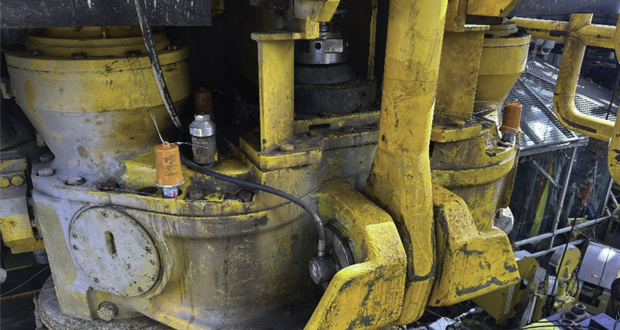
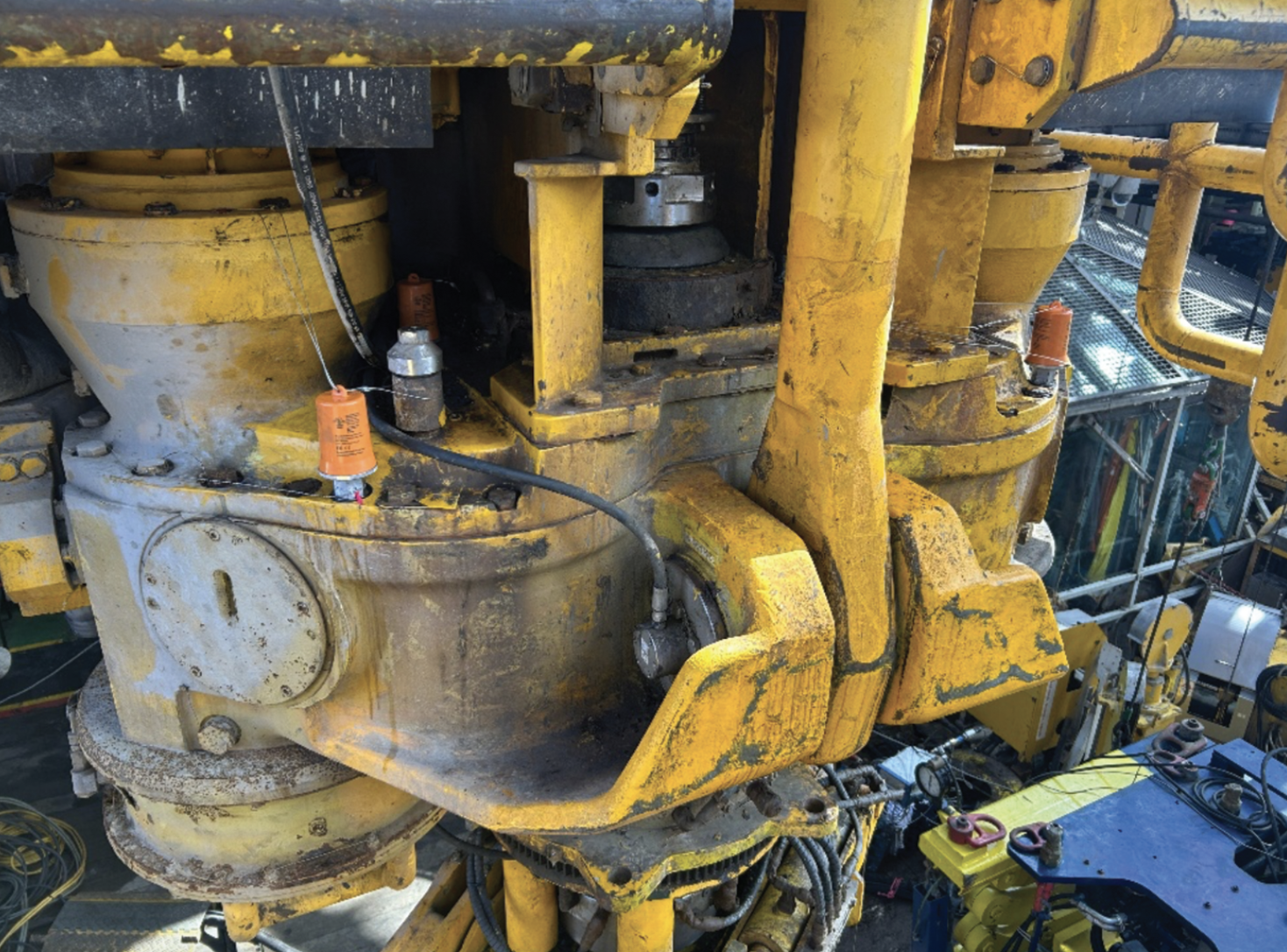
The effectiveness of predictive maintenance hinges on the quality and granularity of real-time condition monitoring. Advanced instrumentation is deployed across critical equipment, including top drives, traveling blocks, crown blocks and drawworks, to capture key parameters such as vibration, temperature, oil quality and pressure. Sensor arrays are selected for their robustness and accuracy in harsh drilling environments, with redundancy built in to ensure data reliability.
The integration of sensors and cloud-based AI platforms, in partnership with technology providers like Nanoprecise, enables automated data acquisition, vibration analysis and report generation. Data is streamed from edge devices to centralized analytics engines, where vendor algorithms process millions of data points to detect anomalies and trend deviations. For drilling equipment, automated notification and analysis are a challenge. Ensuring that maintenance teams are correctly alerted to emerging issues in real time relies on strict data control and context to prevent false positives and allow for rapid response. The continuous variation of operating speeds and loads drives the need for innovative solutions placing guardrails on smart analytics to ensure that like conditions are considered.
Challenges in data acquisition include sensor placement, measurement triggering and the management of data volumes. Drilling environments are characterized by dynamic loads and temperature extremes, requiring sensors with advanced filtering and self-diagnostics. Data integration frameworks must reconcile disparate protocols and formats to enable connectivity between field devices and cloud analytics. In overcoming these challenges, condition monitoring systems become progressively more capable of providing accurate, unmonitored defect notifications and providing the foundation for AI-driven predictive maintenance.
Maintenance optimization
The shift from calendar-based to condition-based maintenance represents a paradigm change in asset management. Traditionally, equipment overhauls and inspections were scheduled at fixed intervals, often leading to unnecessary downtime or missed opportunities to address emerging issues. Condition-based strategies, increasingly supported by data analytics and real-time monitoring, prioritize interventions based on actual equipment health and usage metrics.
For example, category 4 inspections – typically requiring disassembly and extended out-of-service periods — can be deferred or targeted based on objective condition assessments. Data and trend analysis identify which components are approaching critical wear thresholds, allowing teams to prioritize maintenance for at-risk assets while safely extending intervals for those in good condition. This approach has delivered measurable benefits in reducing direct maintenance costs, minimizing shop overhauls and lowering the financial impact of out-of-service periods.
Condition-based maintenance reduces overall maintenance expenditures significantly. Unnecessary replacements can be avoided, and labor resources can be allocated more efficiently. Safety outcomes can also be improved – by proactively detecting anomalies, teams can reduce worker exposure to hazardous environments during emergency repairs.
Additional examples include the use of real-time oil quality sensors to optimize lubrication schedules and vibration monitoring to trigger targeted bearing replacements. In each case, data-driven decision support replaces guesswork, encouraging a culture of proactive asset stewardship.
Case study
In collaboration with ADC Energy, Seadrill extended AI-driven lifecycle management principles to blowout preventer (BOP) maintenance, focusing on annular elements. Traditional maintenance practices relied on cycle counts, time-in-service or periodic pressure tests, often resulting in premature or delayed interventions. The challenge was compounded by limited machine data and the diverse operating conditions encountered by BOPs, especially in subsea deployments and well-hopping scenarios.
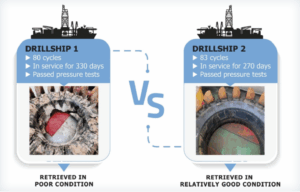
The case study involved a comparative assessment of annular elements from two BOPs installed on separate drillships. Both elements had similar deployment durations and cycle counts, and both had recently passed pressure tests. However, post-removal inspections revealed significant disparities in component condition, underscoring the limitations of existing maintenance strategies.
The study combined operational data tags (cycle counts, pressure profiles, deployment histories) with high-resolution imagery and manual inspection results. Statistical analysis identified strong associations between specific operational parameters and observed damage patterns. These insights highlighted the need for more granular, data-driven assessment tools capable of capturing the true degradation dynamics of BOP annular elements.
As a result, the team developed a multi-layered AI solution, incorporating visual recognition and predictive modeling to enable objective, repeatable evaluation of component health. The case study demonstrated the value of integrating advanced analytics with traditional inspection, paving the way for more effective maintenance planning and risk mitigation in well control operations.
AI-enabled visual recognition
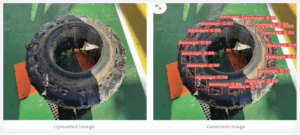
To overcome the subjectivity and variability of manual inspections, a visual recognition system was developed and trained on extensive datasets of annular element imagery. High-resolution photographs, captured during removal and inspection, served as the foundation for supervised learning algorithms capable of automating damage identification and classification.
The training process involved curating annotated images representing a spectrum of wear states from intact to severely degraded. Operational, equipment and maintenance SMEs provided input, ensuring the accuracy of damage classification.
The resultant ML algorithms produced a numerical degradation rating system, assigning scores from 1 (good) to 5 (poor) based on observed wear and damage. Validation involved benchmarking model outputs against independent expert assessments and historical inspection records. In field trials, the visual recognition system achieved a high correlation with manual ratings while delivering the added benefits of consistency and scalability.
Challenges included managing dataset bias (ensuring representative coverage of all damage types), handling occlusions and complex geometries, and integrating visual ratings with operational data streams. Statistical analysis correlated degradation scores with operational histories, revealing actionable insights into the drivers of component failure. This integration of visual AI and operational analytics enabled real-time, objective assessment of BOP annular elements, supporting more precise maintenance scheduling.
Model deployment and continuous improvement
Once the predictive models and visual recognition systems were validated, deployment across multiple rigs commenced during the installation of new annular elements. As these components operated in the field, the system continuously calculated degradation ratings based on live data streams, generating real-time predictions of remaining useful life.
A critical aspect of the deployment was the establishment of feedback loops. Upon removal, elements were re-inspected and photographed, with the resulting condition data fed back into the ML models for retraining. This iterative process of continuous improvement enabled incremental enhancements to prediction accuracy and reliability. Each validation cycle provides new insights into model performance, guiding adjustments to feature selection, architecture and training protocols.
Field validation involved cross-referencing model predictions with actual wear states, failure events and maintenance outcomes. Discrepancies were analyzed to refine algorithms and improve calibration.
The principle of continuous improvement is foundational to AI-driven asset management. By systematically capturing real-world outcomes and integrating them into model retraining, organizations ensure that predictive tools remain relevant, accurate and responsive to operational realities.
Current applications, value
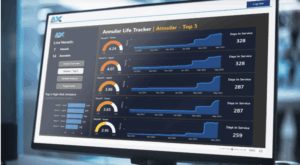
The AI-enabled platform is now being deployed across a fleet of drillships, serving as a decision-support tool for annular element replacement and broader equipment maintenance planning. Real-time dashboards will provide operators with actionable insights, forecasting component longevity and prioritizing interventions for at-risk assets.
The practical value of AI-enabled lifecycle management is evident in improved operational efficiency, cost control and safety outcomes. Organizations are empowered to make informed decisions, maximizing asset performance while minimizing risk and expenditure.
Future developments
Building on the success of annular element monitoring, similar ML models have been developed for BOP ram elastomers, including blind shear, fixed and variable bore pipe ram elements. These models leverage operational data, visual inspection imagery and advanced analytics to predict wear and support proactive maintenance.
Field testing is under way, with early results indicating strong potential for extending predictive maintenance capabilities to managed pressure drilling (MPD) elastomer elements and other critical subcomponents. Each new deployment generates additional data for model refinement. Integration with broader digital transformation initiatives, such as remote operations centers, is anticipated to further enhance the scope and effectiveness of AI-driven asset management.
Technological advancements on the horizon include the expansion to other equipment classes, such as MPD, mud pumps, riser tensioners and control systems. This will enable comprehensive lifecycle management across the drilling value chain. As AI technologies mature, their integration with operational workflows, contractual frameworks and regulatory requirements will shape the future of drilling equipment management. Ongoing innovation and investment are key to realizing the full potential of data-driven lifecycle optimization.
Operational challenges and lessons learned
The journey toward AI-driven lifecycle management has highlighted several operational challenges. Data diversity and quality remain persistent obstacles, particularly for legacy equipment lacking comprehensive sensor instrumentation. Ensuring data integrity requires robust quality assurance protocols, redundancy in data collection and ongoing calibration of sensor networks.
The adaptation of AI models to the unique, dynamic loads and harsh conditions characteristic of drilling environments necessitates extensive field validation and the development of tailored training datasets. Models must account for variable stress profiles, environmental extremes and intermittent data availability. Collaboration among data scientists, subject matter experts and operations teams is essential to turn analytics into actionable maintenance strategies.
Change management is another critical consideration. The transition to condition-based maintenance involves redefining workflows, retraining personnel and fostering a culture of data-driven decision making. Resistance to change, lack of familiarity with AI tools and concerns over job displacement must be proactively addressed through education, stakeholder engagement and clear communication of benefits.
Key lessons learned include the importance of supplementing limited machine data with visual recognition and statistical analysis, leveraging continuous feedback loops for model improvement and aligning predictive maintenance strategies with operational and contractual realities.
Success in AI-enabled asset management is built on a foundation of technical rigor, organizational agility and strategic vision.
Conclusion
The application of AI and ML technologies to drilling equipment lifecycle management delivers transformative improvements in operational efficiency, cost control and safety. By harnessing advanced analytics, real-time condition monitoring and automated decision support, drilling professionals can optimize maintenance strategies, extend equipment life and minimize unplanned downtime. The integration of predictive modeling and visual recognition systems provides a robust foundation for data-driven asset management.
Ongoing innovation – including expanding predictive models to additional equipment classes, adopting edge AI and integrating with broader digital transformation initiatives – will further strengthen the value and reliability of these platforms.
The practical impact of AI in drilling operations is clear, with measurable benefits in performance, safety and cost reduction. Continued investment in data-driven lifecycle management is poised to shape the future of drilling equipment stewardship, ensuring sustainable, resilient and high-performing energy infrastructure for years to come. DC