Wirelines
Interior Department to streamline permitting in Alaska’s National Petroleum Reserve
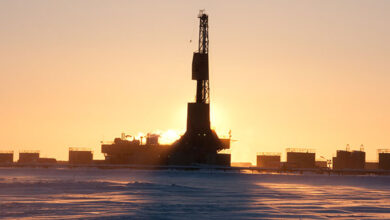
In May, the US Interior Department (DOI) announced the start of an effort to streamline permitting for oil and gas infrastructure in the National Petroleum Reserve in Alaska. The effort comes in response to a petition for rulemaking that requested the US Bureau of Land Management (BLM) to amend its regulations to create a new development permit program in the reserve.
The incoming petition from the Alaska Oil and Gas Association proposes to streamline permitting for construction and operation of qualifying production sites and associated infrastructure that meet predefined criteria.
The BLM has analyzed the type of development covered in the petition through projects such as Greater Mooses Tooth One and Two, Willow, Alpine and other North Slope developments.
As a first step in this process, the BLM initiated a 45-day public comment period to inform an environmental impact statement for production site development in the reserve. This effort will support a rulemaking the BLM expects to undertake, which would consider Alaska Oil and Gas Association’s petition and remain open to refinement as the process continues.
About 1.6 million acres are currently leased in the reserve, with additional leases set to be finalized following the recent lease sale held in March 2026. That sale resulted in 187 tracts receiving bids from 11 companies and nearly $163.7 million in total receipts. It was the first sale for the reserve since 2019.
In separate DOI news, the department also recently proposed revisions to the BLM’s oil and gas leasing rule and its waste prevention rule.
For the oil and gas leasing rule, the revisions would shorten public participation time frames from 90 days to 10 days. It would also authorize noncompetitive leases after competitive auctions, provide replacement lease sales when previous offerings are canceled or delayed, and limit lease suspension approvals to one year with improved timing requirements.
For the waste prevention rule, the revisions would eliminate requirements for waste minimization plans and self-certification statements with applications for permit to drill. It would also establish firm definitions for avoidable and unavoidable losses, authorized venting and flaring, emergencies and measurement standards.
Once the proposed rules are published in the Federal Register, a 60‑day public comment period will begin. The proposals had not been published as of 1 July.
EU cautioned against planned methane emissions rules
On 24 June, energy ministers and secretaries from the US, Qatar, Algeria and Nigeria sent a joint open letter to European Union (EU) leadership urging the EU to rewrite planned methane emissions rules for oil and gas imports.
The EU Methane Regulation (EUMR), which went into effect in 2024, enforces a series of standards around leak detection and venting that aim to drastically cut methane emissions by 2030. Under the EUMR, starting in January 2027, importers must prove that imported crude oil, natural gas and coal originate from jurisdictions with monitoring, reporting and verification standards equivalent to EU rules or to OGMP 2.0 Level 5, the highest tier of the UN-backed Oil and Gas Methane Partnership reporting framework.
Because the EU relies heavily on imported energy, the regulation has far-reaching global implications. It essentially exports the EU’s climate standards to major suppliers, including the four signees of the open letter.
Industry groups and several global exporters have voiced concerns about legal uncertainty and potential supply chain disruptions once the January 2027 deadline for imported fuels kicks in. In response to industry lobbying and energy security risks linked to ongoing geopolitical instability, 12 EU member states have formally requested a three-year delay on the rollout of that provision.
The joint open letter warned that “nearly all EU oil imports, and a significant quantity of EU natural gas,” will struggle to meet the timeline. It asked for a temporary moratorium and protection for existing contracts.
In a report released 25 March, Wood Mackenzie estimated that approximately 43% of natural gas and 87% of crude oil imported by the EU in 2024 could be non-compliant under the regulation requirements set to take effect. It also estimated that EU gas prices could climb to record highs and refinery throughput could collapse by 50% between 2027 and 2030. Gasoline and diesel prices could rise by 24% and 16%, respectively.
US waives sanctions on Iranian crude oil imports through late August
On 21 June, the US Treasury Department issued a wide-ranging 60-day exemption allowing the import of Iranian crude oil, petrochemical and petroleum products into the US, with payment made in US dollars. The exemption is set to expire on 21 August.
Under the new license (General License X), vessels and entities previously subject to US sanctions are also cleared for transactions. The waiver is a condition included in the 60-day memorandum of understanding signed between the two countries on 17 June extending a ceasefire in recent conflicts in the Middle East.
The license permits Iranian oil to be imported into the US but does not authorize transactions involving US-sanctioned North Korea or Cuba, Russian-occupied Ukraine, or any entity that is owned or controlled by or in a joint venture with those countries.