Environment, Social and Governance
France pulls back on renewables in national policy shift
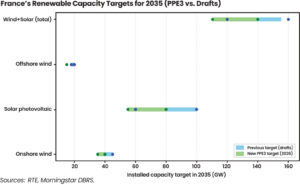
A recent analysis by Morningstar DBRS, a global credit rating agency, pointed to a strategic shift in France’s energy policy. The third Multiannual Energy Program (PPE3), officially adopted by the French government in February 2026, showed that the country has materially reduced its renewable energy ambitions, with combined wind and solar capacity targets for 2035 cut by approximately 20%. In particular, onshore wind and solar will likely see a weakened project pipeline.
At the same time, PPE3 re-anchored nuclear energy as the primary contributor to the country’s electricity system. It confirmed the construction of new reactors while supporting the extension of the existing reactor fleet’s operating life of 50-60 years. This effectively establishes a multi-decade, state-backed nuclear investment pipeline, the analysis said.
It also noted that the shift is being reinforced by geopolitics, which is driving increasing volatility in oil and gas prices across global markets, even while renewables face rising system integration costs and still have intermittency challenges. On the other hand, nuclear power provides dispatchable, low-carbon baseload generation largely insulated from fossil fuel price shocks. This strengthens the case for nuclear energy.
Safety survey: UK workers report rise in near-misses
An annual report issued in June by Dräger Safety UK, a provider of safety technology, outlined a rising risk of a major industrial disaster, with more than half (53%) of survey respondents suggesting that the risk of such an event in their sector is higher today than it was 10 years ago. Further, 51% reported that near-misses have increased in the past two years.
Almost three-quarters (72%) of respondents attributed these trends to global volatility, saying that supply chain disruptions have made it harder to obtain parts, materials or support. Frequent organizational changes or strategy shifts, driven by external volatility, are also making safety harder to manage, 61% of respondents said.
Encouragingly, more than three-quarters of respondents (76%) said they believe their organization is making efforts to actively engage staff in HSE. However, almost two-thirds (63%) of front-line workers said that their employers don’t understand just how bad things have become “on the ground.” Moreover, the research highlights that 91% of respondents said they place the greatest trust in themselves when it comes to their own safety. This emphasis on individual responsibility risks undermining shared accountability for safety, the report noted.
The research was conducted across 1,000 respondents in UK organizations with 50+ employees during March 2026.
Study: Full fossil fuel phase-out by 2050 would require 80% more electricity generation
Fully phasing out fossil fuels worldwide by 2050 would require global electricity generation to expand by roughly 60-80% beyond the levels projected in conventional 1.5°C climate pathways, according to a recent study. The research, led by Kyoto University, Hokkaido University and the International Institute for Applied Systems Analysis (IIASA), provides one of the first comprehensive multi-model assessments of what a “zero-fossil” global energy system would require.
For the study, the researchers compared conventional 1.5°C-compliant mitigation pathways with scenarios in which coal, oil and natural gas are fully phased out between 2050 and 2100. They found that a zero-fossil scenario would require:
- 1.6–1.8 times more electricity generation by 2050;
- Much faster expansion of solar and wind power capacity;
- Rapid deployment of electrolyzers and green hydrogen production;
- Significantly higher cumulative energy investments;
- Deeper changes in energy demand and consumption patterns.
Importantly, the researchers emphasized the study does not conclude that a complete fossil fuel phase-out is the only pathway consistent with the Paris Agreement’s 1.5°C goal. Further, they noted that pathways toward full fossil fuel phase-out must also address questions of equity and a just transition.