Drilling & Completion Tech Digest
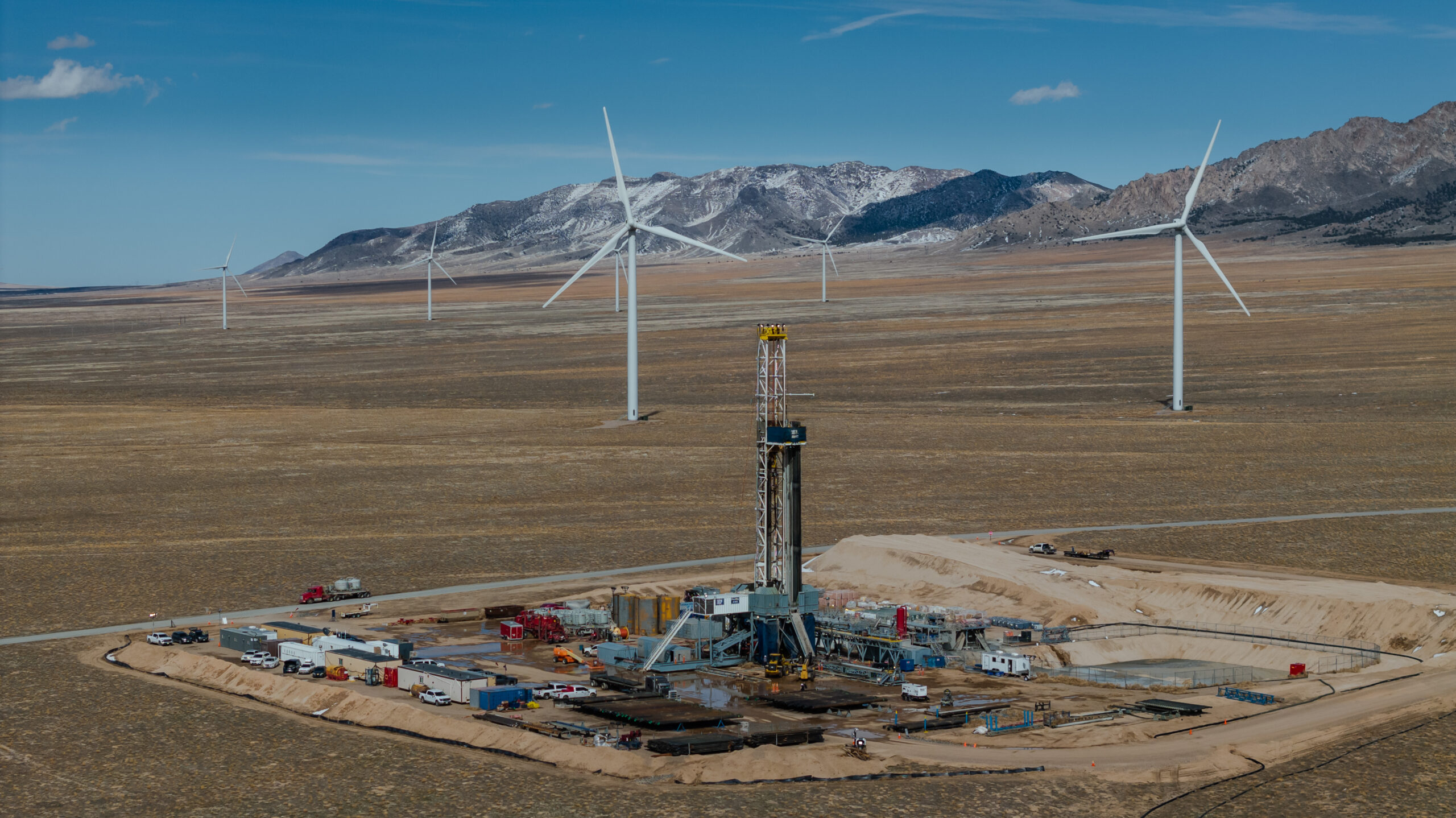
Fervo drills hottest well to date at more than 555°F
Fervo Energy announced the successful completion of an appraisal drilling campaign at a new greenfield geothermal site, Project Blanford, located in Millard County, Utah. The drilling results confirm resource temperatures above 555°F at approximately 11,200 ft deep, exceeding the requirements for commercial viability. Drilled in under 11 days, the vertical appraisal well marks the hottest well drilled in the company’s history.
An independent assessment confirms a multi-gigawatt resource potential at Blanford. Additionally, a diagnostic fracture injection test was performed, validating the ability to stimulate the target formation and providing key reservoir data for development planning.
The appraisal results reflect the growing role of AI-enabled drilling and exploration technology in Fervo’s development strategy. Using proprietary, AI-driven subsurface analytics, Fervo identified a novel play concept targeting a hot sedimentary basin and optimized the drilling plan. Temperature logs measured in the appraisal well place the site above the 95th percentile for deep geothermal gradient across the Western United States, highlighting the company’s ability to detect and develop enhanced geothermal systems (EGS) sweet spots using AI-enhanced geophysical techniques.
The new greenfield site also expands Fervo’s geologic footprint as previous projects validated EGS development in metamorphic and igneous formations. The target geothermal reservoir at the Blanford site consists of sedimentary formations including sandstones, claystones and carbonates, which can be drilled more easily and cost effectively than the more commonly targeted granite formations.
Valeura announces drilling of Gulf of Thailand’s longest horizontal interval to date
Valeura Energy recently completed a development drilling campaign at Block B5/27 in the Gulf of Thailand, with one well establishing a regionwide benchmark for horizontal drilling length. The JSB-28ST2H horizontal development well achieved a horizontal interval of approximately 3,875 ft, the longest drilled in the Gulf of Thailand to date, according to the company.
The drilling program consisted of one deviated and eight horizontal wells drilled in the Jasmine and Ban Yen fields, all of which were brought on-stream as producers. Several wells were engineered to intersect additional appraisal targets en route to their primary objectives, identifying further oil accumulations that will inform future infill campaigns.
In two wells drilled from the Jasmine B platform, Valeura adopted an innovative approach by reusing shallower sections of existing wellbores, then sidetracking through existing 7-in. casing to drill the new horizontal sections. This method reduced drilling time and mitigated drilling risk in certain downhole intervals.
All horizontal wells in the campaign were completed using autonomous inflow control devices to manage fluid inflow and improve reservoir performance, a technology Valeura is expanding across its Gulf of Thailand drilling operations.
The company has one drilling rig contracted through August 2026, and its 2026 work program calls for 16 development and appraisal wells across the Jasmine, Nong Yao and Manora fields to sustain production and extend reservoir life.
New high-torque Wedge 451 connection sees success in multiple Permian wells
Tenaris’ Wedge 451, a threaded and coupled connection designed for extreme torque and quick installations in slim wells, was recently deployed in multiple wells in the Permian Basin.
The new connection was developed over 18 months to meet demanding torque requirements within limited clearance. It delivers higher torque capacity and improved tensile efficiency compared with the Wedge 441 connection. To validate its performance, the connection underwent a testing program under Tenaris’ Multi-Fractured Horizontal Well protocol for shale applications, including fatigue and frac cycles, liquid and gas testing and limit-load evaluations. As part of the RunReady service, pipes were delivered ready to be run, with a pre-applied running coating that simplifies onshore operations and enhances efficiency.
The first deployments, conducted between July and August 2025, confirmed the connection’s performance in long laterals. To ensure consistent quality during installation, Tenaris used its iRun Casing digital tool for real-time monitoring. It tracks each step of the running operation to identify opportunities for optimization and continuous improvement.