As high-intensity drilling takes toll on rigs, where can drillers find solutions?
By Linda Hsieh, Editor & Publisher
For a few years now, drilling contractors have attempted to spotlight a growing issue with their traditional business model, aka the dayrate model. Even as they invest in rig upgrades and digital technologies that improve drilling performance and shorten well cycle times, the dayrate model has not allowed them to participate in the value created. The cost savings, by and large, go to the operators.
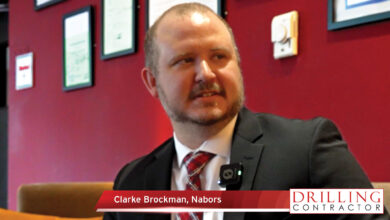
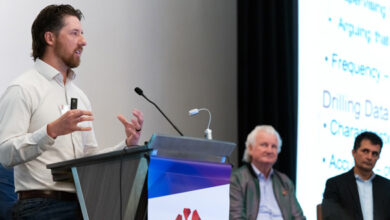
Speaking at the IADC World Drilling Conference in June, Siggi Meissner, President of Global Drilling and Energy Transition for Nabors Industries, pointed not only to this imbalance but also the fact that more efficient, high-intensity wellsite operations are taking much bigger tolls on rig equipment.
In an analysis of Nabors’ West Texas operations from 2018 to 2025, he showed that footage drilled per day increased by 133%, well lengths increased by 25% and days per well decreased by 45%. For the operator, their cost per foot decreased from $161 to $144 over that period. On the other hand, the drilling contractor saw their maintenance costs per rig year rise from around $889,000 in 2018 to more than $1.4 million by 2025. Their revenue? Down 39% per foot drilled.
Mr Meissner talked about how Nabors is working around this challenge with performance-based contracts when possible. But some in the industry are going even beyond that to the alliance model, which Aker BP’s VP of Drilling and Wells Eamon Condon also discussed at the conference. This model adopts long-term partnerships and incentive schemes to allow all stakeholders – even drilling contractors – to share in the value gained whenever performance improves.
“One could say that in a traditional operating model, the operator calls all the shots,” Mr Condon said. “The operator says what they want, when they want it, how they want it, and pretty much makes all the decisions around the program. The suppliers and partners, they deliver what they’re asked for, and they deliver it under tight contract conditions.”
With alliances, drilling contractors and other service providers are brought to the table as “equal partners and trusted advisors,” he explained. “It’s a relationship built on making each other better.”
Aker BP has seen tremendous success using this model over the past eight years, delivering multiple projects up to 10 months ahead of schedule. With drilling performance specifically, he noted that their offshore teams now often drill more than 1,500 m in a 24-hour period. “The most recent well we had last week was 2,457 m drilled in 24 hours using wired drill pipe and autonomous drilling systems,” he said.
Of course, business model changes like this will likely need to be driven by operators. If drilling contractors want to spearhead their own solutions, they’ll likely have to look toward technology, and this is where AI can come in.
On Page 24, you’ll find an article penned by Precision Drilling and Prescient Devices, a provider of data processing and analytics solutions. Working together using AI technologies – genetic optimization, anomaly prediction and remaining useful life prediction are some of the concepts discussed – Precision has been able to achieve significant cost savings on rig maintenance.
They started with mud pumps, since these consumables have high component replacement frequency. An AI model is now running on more than 300 of Precision’s mud pumps and predicting up to 88% of fluid end failures. Module failures, which make up some of the most expensive fluid end components, have been reduced by 85%. It’s a great example of how drilling contractors can leverage AI to deliver tangible, positive results to their own bottom lines.
Our “AI in Drilling” section, including reports on AI-driven initiatives at H&P, Nabors, Devon, Corva, SLB and more, starts on Page 14.