Engineering ahead of the curve: tubular technology for the next challenge
Manufacturers are thinking beyond today’s wells when it comes to makeup torque, pipe wear and rig integration for automated tools
By Stephen Whitfield, Senior Editor
A joint of drill pipe doesn’t experience a well construction program as one continuous job. It experiences it as a series of handoffs. It is manufactured to survive whatever the hole will do to it, gripped and torqued into connection by a wrench that has to make up thousands of those joints without failing, then be run into the well by equipment that has to move it, track it and hand off control of it cleanly enough that nothing gets missed.
Three different companies, working three different points along that same physical chain, are all converging on the same instinct when it comes to tubular innovations: Stop engineering for the job in front of you, and start engineering for the one that’s coming.
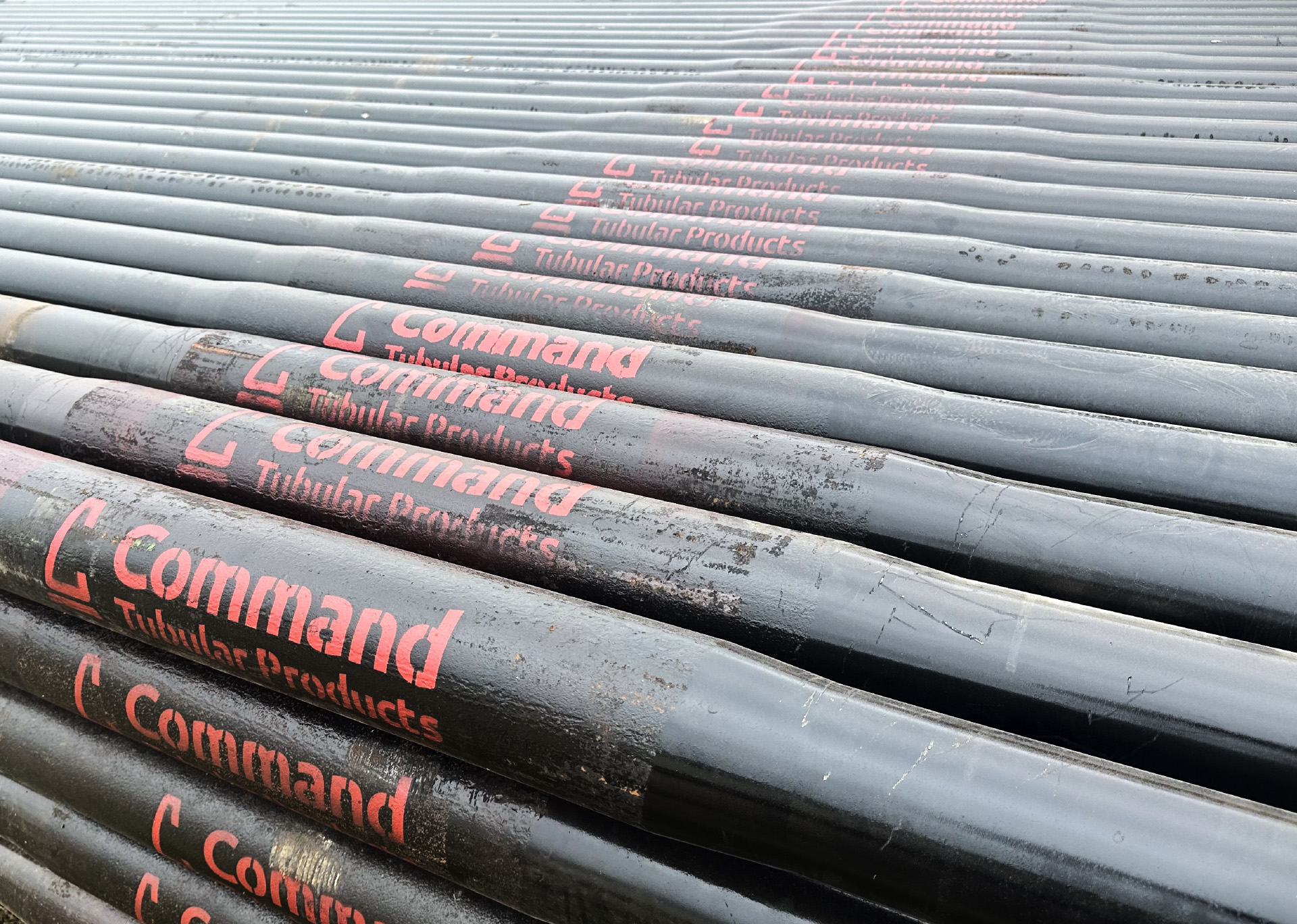
At Command Tubular Products, that instinct starts with the pipe itself. Longer laterals have quietly rewritten how fast a joint of drill pipe wears out. The aggressive tube wear experienced rotating through highly inclined and/or long horizontal sections in today’s extended-reach wells can end a joint’s working life years earlier than what was previously experienced in a typical vertical well.
To address this challenge, the company launched CEW (Command Extended Wear), which the company’s President and CEO Charlie Garvey said is “basically a drill pipe design with an enhanced center section to reinforce high wear areas on the tube.”
It’s also increasingly a high-torque product by necessity: The same aggressive horizontal wells driving the wear problem tend to require premium, high-torque connections to hold up, which is why Command frequently pairs CEW with its CET (Command Extra Torque) threads.
Then, that torque has to actually get applied by something. Longer laterals and premium connections haven’t just made tubulars themselves work harder; they’ve also required more from the wrench making up each connection.
“We’re seeing upwards of mid-50s (thousands of ft-lbs) on some connections today, where years back it was in the 30s and maybe the mid-30s to low-40s on tools that are expected to stay in service for 10 to 20 years with multiple refurbishments after they’re built,” said Brian Winter, VP of Engineering at Canrig.
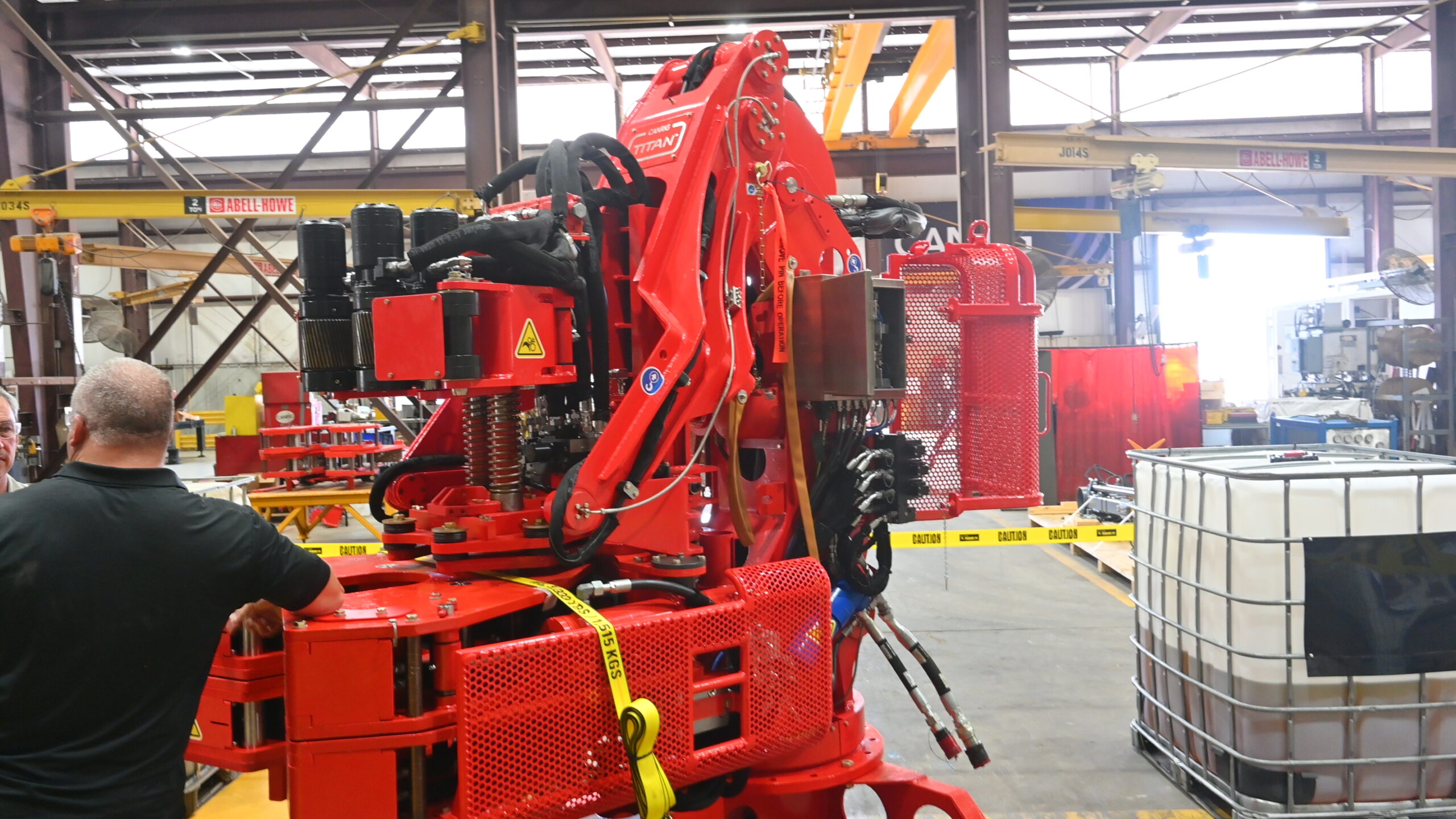
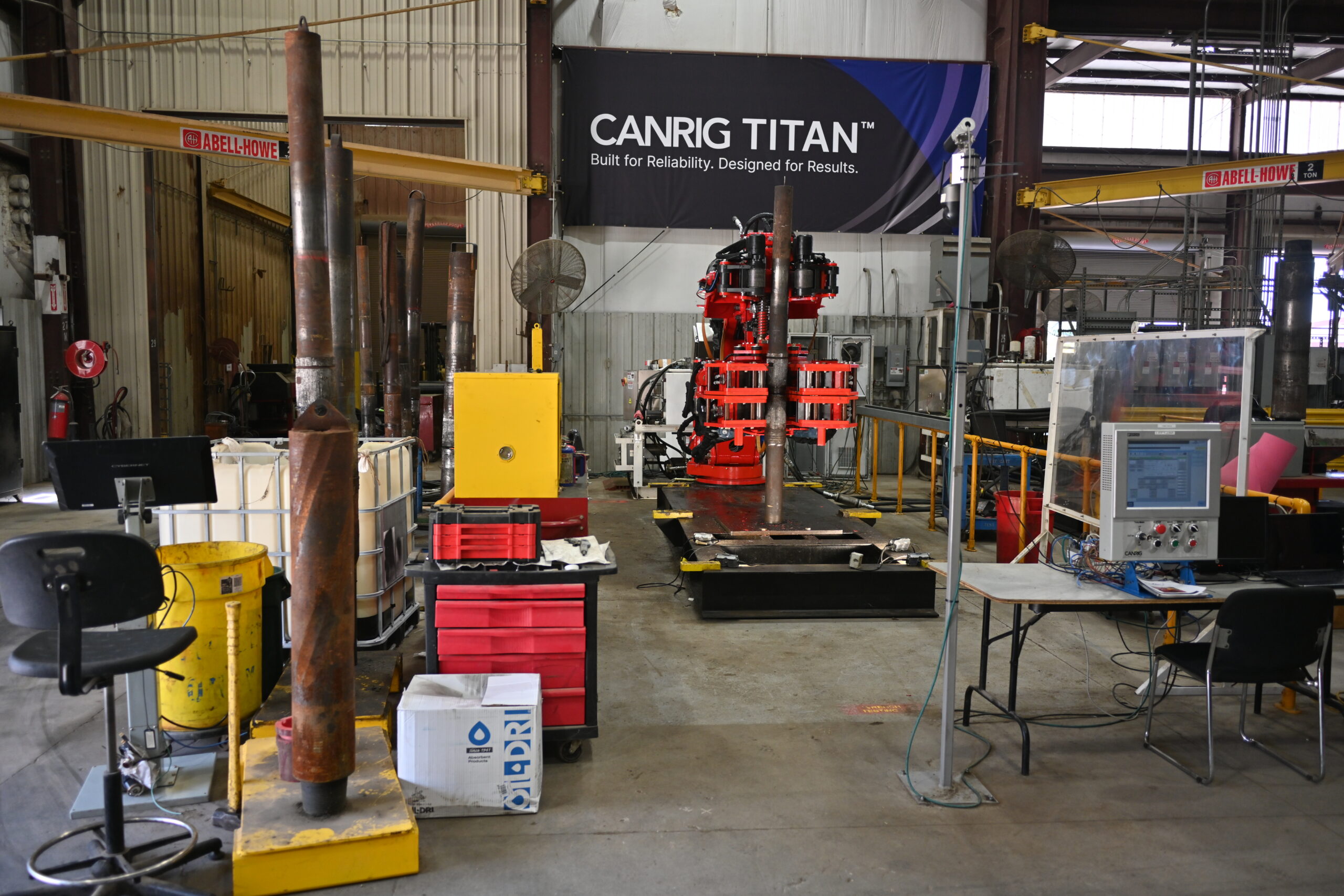
The Canrig Titan wrench, launched this year, is rated for up to 110,000 ft-lbs of makeup torque. It was built with headroom well beyond what any current connection in the field demands, recognizing that a tool expected to stay on a rig for 15 to 20 years has to survive whatever tubular design comes after what’s seen today.
And once a tubular is properly made up, it still has to be run. Rather than engineering for a single rig’s worth of torque or wear, Expro’s latest effort is about engineering for repetition: building a standard integration architecture between its casing running equipment and a rig’s control system. This prevents companies from having to solve that integration fresh, one custom build at a time, for every rig that asks. However, due to the diversity of rig designs out there, the goal wasn’t to have one build that fits everywhere – it was to establish a repeatable process that can adapt quickly the next time a different rig needs the same capability.
“There are a lot of requirements you have to look at with a new architecture, a lot of interfaces,” said Josh Thibodeaux, Senior Product Line Manager, Well Construction at Expro. “Different rigs have different add-on packages with different control systems, so with any architecture you have, you need to make sure that you’re working with the right systems and that it’s specific for that rig, even if it is a standard architecture.”
Three companies, three different points of contact with a joint of pipe – its wear, its connection and the equipment that runs it – but the same underlying ambition: Whatever’s being built today has to hold up against a job that hasn’t fully arrived yet.
Developing a standard integration
Automated tongs have become indispensable in tubular handling on many rigs, replacing manual labor, protecting pipe threads and speeding up rig floor operations.
Expro’s already had a fully automated tong in its portfolio for the past five years. What the company is working on now is something less visible, but arguably just as consequential: a way to plug that tong – and the rest of the company’s tubular running equipment – directly into a rig’s control system, so the rig itself can treat casing and completions work the same way it already treats drilling.
The company has built plenty of these custom integrations over the years, each tailored to a specific rig’s control system layout and quirks. But now, instead of another bespoke build, Expro is working with a major rig control system provider to establish a standard architecture, one that both companies can reuse the next time a client asks, rather than starting over from a blank sheet.
“Integration is nothing new to us. We’re just attacking this one from a little bit of a different angle,” Mr Thibodeaux said. “Every time we do an integration, it’s a one-off. You’re doing it for that rig and that client. But we want to develop something that both we and the system developer can leverage. It can make it faster to deliver to market when the next customer asks.”
The physical footprint for this integrated system is modest: a junction box and a rig integration module, installed wherever a given rig has room for them – typically the drill shack or the electrical control house. The integration module houses one of two PLCs in the system; the other stays inside Expro’s own equipment-level control platform, running the tools the way it always has.
The module’s job is to let the two systems talk, sharing pressures, tool position and system status that used to live entirely inside Expro’s own platform, and receiving the same in return from the rig.
That connection is what makes a handshake – a formal transfer of control over a specific piece of equipment from Expro’s system to the rig’s, and back – without either side losing the ability to operate independently.
Getting that right, and representing Expro’s equipment correctly inside the rig’s own anti-collision and zone management systems, is most of what integration means in practice. And it has to be worked out differently from rig to rig. Even nominally identical rigs built in the same yard still ship with different add-on packages and different control systems depending on what the rig owner ordered, so a standard architecture here doesn’t mean one standard build. It means a repeatable process for adapting to whatever configuration is actually on site.
The new integration capability is built directly into the existing human-machine interface in the driller’s cabin: Once a handshake hands over control of casing-running equipment, new options appear on the screen that the driller already uses for everything else.
“The real push from the driller side of things is they didn’t want something else to look at. Even though it’s easy to use a separate tablet that we could provide, he still wants to work off of his screens and his control system,” Mr Thibodeaux said.
When running drill pipe, drillers already operate the top drive and open and close the drill pipe slips themselves. When running casing, Expro’s crew currently controls the elevators and slips while drillers only move the block – a division of labor that, in practice, means pausing for someone else’s confirmation before the sequence continues. The repeated ask from drilling contractors has been to let drillers run the elevators and slips themselves, the same way they already handle drill pipe. That’s what the integration is built to give them.
Redundancy stays underneath all of it. If the digital system fails, Expro can plug in a standard manual control panel and keep the job moving; short of a full failure, a driller mid-sequence has defined subroutines to walk the system back to a known starting point, and a full transfer back to manual operation is available beyond that.
Mr Thibodeaux framed the new integration as one stage in a larger roadmap. The first stage was equipment-level automation, including the automated tong, running independently on rigs that had already agreed to bring it aboard, with the rig doing only the physical work of moving that equipment into and out of position. That let operators see the technology in action before being asked to integrate it more deeply. The stage now under way is a deeper integration – folding proven equipment into the rig’s control architecture, rather than running alongside it. This particular effort has been roughly a year in planning, with Expro conservatively targeting Q1 2027 for commercial rollout.
Part of what makes this stage slow – five years since the launch of the automated tong – is that it requires four separate parties to agree to do something at the same time: Expro, the rig control system manufacturer, the rig owner and the operator running the well. “It takes everyone,” Mr Thibodeaux said. “Each party needs the patience and the technical appetite to work through this.”
The slow roll of this integration is nothing new, however. Mr Thibodeaux noted Expro introduced an automated makeup tong in Norway in the early 2000s — it sat largely unused for over a decade before there was real demand for it.
He attributes the time gap less to the technology itself than to the risk of adoption. Most operators are reluctant to be the first to try something unproven – the downside of a mistake is steep, and the upside of being early isn’t always obvious until someone’s actually using the system and discovers an unanticipated benefit. “Sometimes it’s all different people’s different points of view,” Mr Thibodeaux said. “Getting a system like this adopted isn’t only a matter of proving it works. It’s convincing an industry accustomed to waiting that this is the time not to.”
Engineering for requirements of future connections
Mr Winter describes the design brief behind the Canrig Titan wrench as building a tool to solve a problem the industry doesn’t have yet.
The problem is torque, and it’s been climbing steadily for years. As laterals stretch beyond three, four and even five miles and operators move to premium connections, the torque required to make up a single connection has risen with it. Designing a wrench for today’s torque requirements could mean that wrench will become obsolete well before its working life is over.
That’s why Canrig decided not to build the Canrig Titan for today’s connections. Instead, it was built to a rating of 110,000 ft-lbs of makeup torque – a ceiling well beyond anything currently in use. The company arrived at this equipment rating by extrapolating the same upward trajectory in connection torque that has already brought the industry from the 30,000 ft-lbs range to the mid-50,000s in recent years.
However, getting there wasn’t just a matter of building a bigger machine. Torque and clamping force trade off against tool joint diameter – smaller diameters need proportionally more clamp force to hold against the same torque – so Canrig had to forecast not just how much torque future connections might demand, but also how that torque would relate to the pipe diameters likely to carry it. Then they had to engineer clamping force to match a target that doesn’t yet exist.
In field testing of the Canrig Titan wrench conducted in 2025, the company saw a 50% reduction in makeup and breakout times at well center, compared with fleetwide averages for other wrenches in its product line. The single biggest driver behind that reduction, the company said, comes from the fact that the wrench can rotate 45° in a single pass, compared with 30° per stroke for prior wrenches in the company’s fleet. That extra 15° is the difference between needing multiple partial “bites” to complete a connection and finishing it in one bite.
“From day one, we agreed that we needed to have more rotation,” Mr Winter said. “Our traditional wrenches use one hydraulic cylinder. We use multiples in this case. We’re able to get that extra rotation through some geometrical tweaking, plus sensors on the wrench that are providing us feedback.”
The rest of the time savings achieved came from the hydraulic system itself: a regenerative clamping circuit that reuses fluid flow from the rod side of the cylinder to speed up clamping rather than sending it back to tank, along with control side changes aimed specifically at trimming connection time. All three pieces – the rotation, hydraulics and controls – are native to the wrench itself, not dependent on the other equipment around it.
Adding torque and rotation capability did come with a cost: additional weight. However, Canrig set a strict weight target early and treated any deviation from it as something that needed substantive justification, because the wrench was meant to be swapped onto rigs that already have a wrench in place.
Another improvement involved the wrench’s dies – the six replaceable components that actually grip the pipe. Changing those dies used to require tools on the drill floor, but the Canrig Titan’s dies come out and go back in by hand. The company says a full six-die change can be done in under five minutes.
Mr Winter said that benefit is split evenly between safety and efficiency: “It’s definitely a matter of both. The rig hand doesn’t have to use a tool to change the die, and then you’re not spending a lot of time changing the dies. It allows the hand to focus on other activities.”
The wrench’s automation runs on a computer vision system that aligns the wrench to the drill pipe, reducing the number of inputs required from the driller before a connection can proceed. Canrig’s stated goal for the interface is to get the process down to one button. “Go” is effectively it – the system handles alignment and execution, and the driller’s role narrows to monitoring and confirming, with a kill switch available at any point if something looks wrong. The vision system itself has achieved above 95% accuracy in the field since commercial launch, according to the company.
One piece of that automation wasn’t part of the original design but came about due to feedback received during the development process. Specifically, crews experienced recurring frustration getting the wrench perfectly centered on the pipe before a connection starts. In response, Canrig added a mechanical centralizing device: a horizontal (x-y) adjustment that squares the wrench to the pipe’s axis of rotation in the moment just before clamping. The payoff shows up less in raw cycle time than in wear – less stress on both the tool and the pipe itself, over the course of repeated connections.
When it came to material choices for the wrench, Canrig chose to use standard, readily available steel, which helps to keep switching costs low for users. Further, it can help to avoid supply chain complications and keep the design serviceable over a long asset life.
That serviceability was itself a design priority, allowing for specific components that fall out of tolerance to be swapped out, rather than having to replace the entire frame. Mr Winter said this was a total-cost-of-ownership decision as much as an engineering one.
The new wrench moved from concept to commercial deployment in under two years. Canrig began exploring the concept in July 2024, spent roughly a year on mechanical, hydraulic and automation design, and deployed a prototype to East Texas in November 2025. After roughly six months of field testing – and a handful of design tweaks based on crew feedback, including the centralizing device – the first fully commercial unit went out to South Texas in June 2026. Four more units are staged for deployment in Texas.
Although the scale of adoption will depend on operators’ decisions as they weigh upgrade costs against performance gaps they’re seeing from older equipment, Mr Winter said he’s confident in the value of the new wrench. “We feel that we’ve created something that will force the customer’s hand,” he said. “There will be a benefit for them financially.”
Click here to see DC‘s video interview with Mr Winter on the Canrig Titan wrench.
Extended wear pipe
For most of drill pipe’s working life, the math was simple: a vertical well puts little lateral stress on a tube body, so a joint could reasonably be expected to last seven to 10 years. Then wells started going sideways — one mile, two, three, four — and the math changed.
“Once we started going horizontal, instead of our pipe lasting seven to 10 years in a vertical well, we’re finding it’s lasting one to three years in a horizontal well,” Mr Garvey said.
Command Tubular’s CEW design addresses this problem with an enhanced center section. The tube design is similar to that of standard heavyweight drill pipe tubes. However, the tube is manufactured and heat treated with a larger OD and commensurately thicker wall. For example, a 4 ½-in. drill pipe tube would be manufactured from a tube with a 4 ⅞-in. OD. The 4 ½-in. tube body is turned to size, leaving a center wear pad, typically 30 in. long, and external upsets. The tool joint manufacture and the process of connecting the tool joints to the pipe remain the same as with conventional drill pipe.
The wear pad’s benefit isn’t limited to protecting the tube itself. Because contact with the wellbore is concentrated in that same 30-in. section rather than spread across the full length of the joint, the pipe resists buckling better – the thicker, stiffer section holds its shape under load. Mr Garvey ties that directly to drilling performance: Less buckling means more of the weight applied at surface actually reaches the bit instead of being absorbed by the pipe flexing against the hole. More weight on bit, in turn, generally means faster penetration.
CEW’s positioning in the drill string reflects a deliberate middle ground. It carries the same wall thickness as standard drill pipe, which gives it comparable flexibility, but its wear resistance approaches that of heavyweight drill pipe – without the heavyweight’s added mass. That lets operators run more of it in a string without the weight penalty of conventional heavyweight pipe, and its stiffness makes it particularly suited to high-friction sections: the curve between vertical and horizontal, and sections with a high dogleg.
CEW isn’t sold as a fixed connection. It ships with whatever thread configuration matches a customer’s existing drill string, though Command frequently pairs it with its own CET high-torque threads, since the wells that most need CEW’s wear resistance – long, aggressive horizontal sections – also tend to be exactly where high-torque connections are already required.
Operators have applied CEW differently depending on what a given well needs, from running it the full length of a horizontal section – which can call for several hundred joints – to spacing it more sparingly through the highest-friction stretches or concentrating it in the curve. There’s no single prescribed layout; the company treats it as a tool that operators place according to where they expect the most wear.
CEW first went into service in 2021 and has since expanded into different outer diameters and applications. Its use today is concentrated mostly in Canada’s Montney and Duvernay plays, with a smaller but growing footprint in the US Permian Basin. Roughly a dozen operators are currently running it. DC
Click here to see DC‘s interview with Andy Dansereau of Command Tubular Products.