Not just monitoring centers: RTOCs should unify planning, execution, after-action reviews
Using a connected system to orchestrate standardized, AI-enabled workflows could lead to 15-20% reduction in NPT, invisible lost time
By Chris Schneider, Corva
Unconventional drilling continues to deliver some of the most significant performance gains in well construction history. In the Permian, wells that once required 20 to 30 days now routinely finish in 10 days or less. Similar performance improvements appear across the Eagle Ford, Haynesville, Bakken and many offshore programs. These results come from disciplined engineering, capable rigs, modern tools and strong field leadership.
Yet, the rapid compression of cycle times is creating an imbalance. As well delivery accelerates, the distribution of work across engineering, field execution and real-time support has shifted unevenly. Engineers are taking on more rigs and more administrative work. Field leaders are absorbing a rising share of real-time surveillance. Real-time operations centers (RTOCs) have grown in number, but not always in influence. Data has become fragmented across planning, real-time and reporting systems.
The outcome is a well construction system that drills quickly but does not always drill consistently.
The next step change is not about setting a record on a single well. It is about increasing predictability across the entire rig fleet. The next gains come from reducing variability, tightening operational control and enabling teams to spend more time on design, risk mitigation and collaboration. This requires a more balanced and connected well construction system.
Where the imbalance appears
Engineering workloads keep growing: Modern drilling engineers often manage several active rigs while juggling well programs, authorizations for expenditure (AFEs), regulatory documentation, vendor reconciliation, dashboards and internal reporting. Digital tools reduce some friction, yet many operate in isolation. Engineers spend significant time transferring information between systems rather than designing wells or collaborating with field teams.
As administrative load grows, engineering becomes reactive. Less time is available for offset analysis, hazard identification or proactive design improvements. The discipline that reduces NPT is the same discipline that becomes hardest to apply.
Field leaders absorb more real-time responsibility: Superintendents, drilling managers, companymen and rig crews already operate in environments defined by tight schedules, complex logistics, rotating crews and continuous handoffs between service lines. As more surveillance shifts to the field, these leaders receive more screens, more alerts and more raw data that is not always aligned with planning assumptions or engineering standards.
Instead of gaining clarity, many teams experience cognitive overload. When signals are not prioritized or contextualized, decision making becomes harder, not easier.
Fragmented systems limit learning: Most well construction lifecycles are spread across several systems. Planning software, real-time visualization platforms, business intelligence tools, spreadsheets and event logging systems all operate independently. Planning, execution, after-action review and redesign exist, but they rely heavily on manual handoffs.
This fragmentation slows continuous improvement. Lessons learned remain isolated in spreadsheets or personal notes. Operating parameters differ between groups. Data definitions diverge. Field procedures do not always reflect engineering intent. When staff turnover occurs, the gaps widen.
RTOCs need to evolve
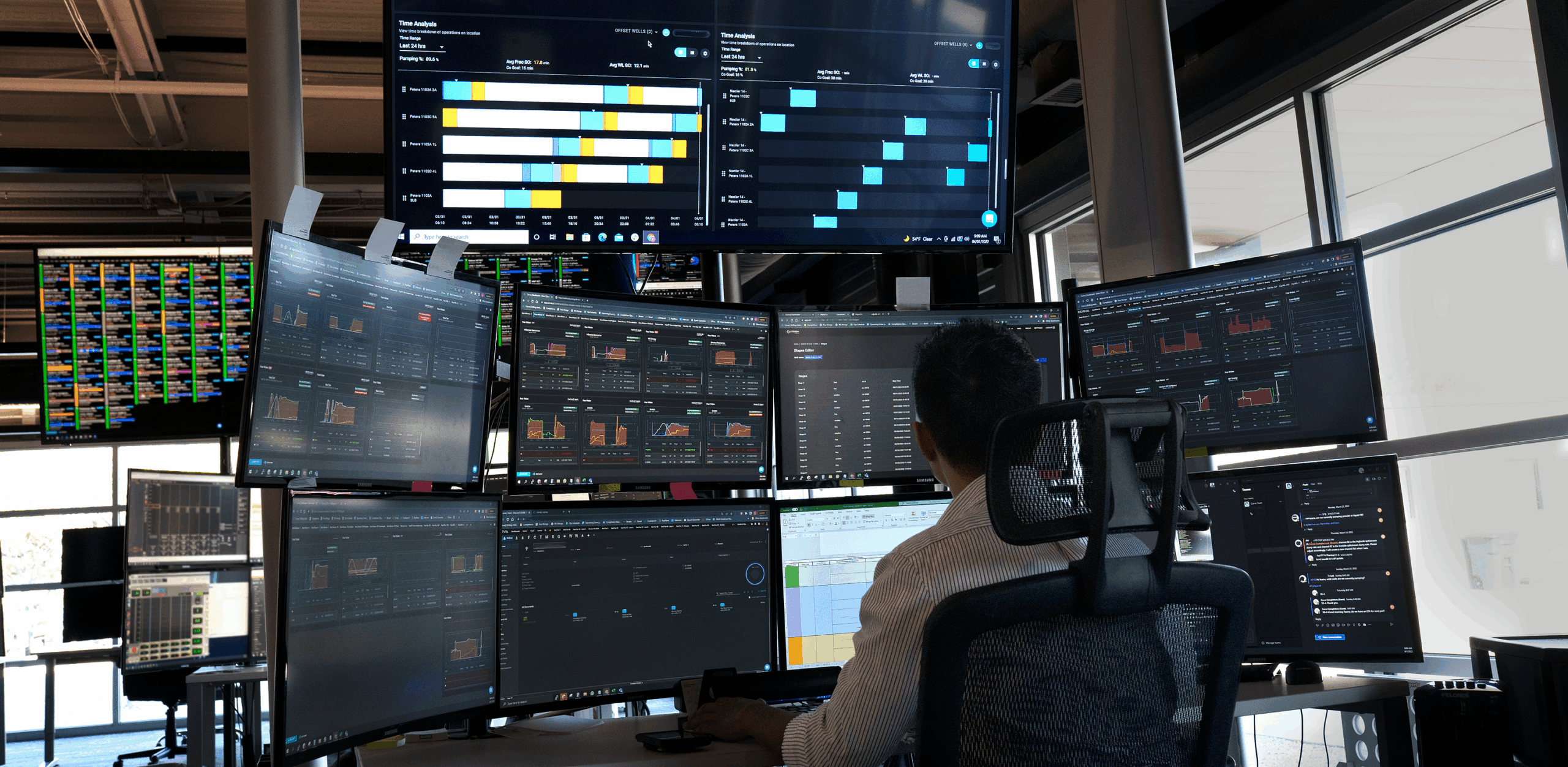
RTOCs exist to manage complexity. They centralize surveillance, support event response and provide a second set of eyes on the operation. Many operators see real value from their RTOCs, yet most centers still reflect the fragmentation of the broader workflow.
RTOCs frequently run multiple analytics environments simultaneously. Directional drilling, geology and performance functions operate in parallel without full integration. Alerting systems are not always tied directly to field procedures. RTOCs generate visibility, but visibility alone does not produce consistent performance.
The opportunity is to shift RTOCs from monitoring centers into connected operational hubs that unify planning, real-time execution and learning. This shift represents the next major lever for improving well construction performance.
The case for a connected well construction system
Achieving the next performance gain requires a system that links planning, execution and redesign in a continuous loop. This does not require new tools so much as a connected architecture that uses shared data, consistent workflows and common definitions.
A connected system functions through four continuous stages:
- Planning using standards, offset knowledge and risk models;
- Executing with real-time surveillance aligned to operating envelopes;
- Reviewing using structured learnings captured during drilling; and
- Redesigning by feeding those learnings directly into future plans.
When planning environments, RTOCs and field procedures all use the same data and logic, three benefits appear:
- Engineers and RTOC personnel spend less time reconciling data;
- Field teams receive clearer and more consistent guidance; and
- Lessons learned become reusable assets rather than isolated knowledge.
The role of AI
AI provides significant value, but only when deployed within a connected architecture. Its most reliable impact today comes from reducing administrative load and improving analysis for engineering teams and RTOCs.
High-Volume, Low-Value Work: AI can generate first pass drafts of end-of-well reports, offset analysis summaries, after-action review content, daily drilling narratives and event classification. Engineers can retain full control and edit for accuracy, but AI will removes the initial workload. This gives teams more time for design, communication, and risk mitigation.
High-impact decisions without replacing human judgment: Models that detect stuck pipe, washouts or abnormal torque must be introduced carefully. Best practice includes shadow testing, SME review, thorough calibration and strict alignment with field procedures. Trust builds only when AI strengthens existing workflows rather than disrupting them.
The next efficiency gain
A realistic 15-20% reduction in invisible lost time (ILT) and NPT does not mean every well becomes dramatically faster. It means operators tighten the distribution of performance across all wells. They see fewer outliers, fewer unplanned deviations and fewer events that drive up flat time.
This improvement comes from:
- Stronger process control supported by more available engineering time;
- Clear, data-driven standards shared across planning, RTOCs and field teams;
- Earlier detection of deviations with actionable procedures; and
- Consistent reuse of validated learnings.
The next step change will be a shift from chasing records to creating a factory model for reliable, repeatable well construction.
How operators can achieve that gain
The RTOC is the most effective starting point because it sits at the center of the well construction workflow. To unlock the next level of value, RTOCs must be designed around people and workflows rather than hardware and screens.
- Build role-clear workflows: Teams need precise definitions of who owns each alert, who evaluates it, who makes the decision and who escalates. Every RTOC output must map directly to a field procedure or trigger an update to that procedure.
- Reduce noise and focus attention: High-performing RTOCs minimize low-value alerts and prioritize signals tied to safety, equipment integrity and NPT risk. Alerts require context, not raw data, so rig crews receive few but meaningful prompts. Continuous feedback from the field helps refine the signal path.
- Integrate tooling into a single data backbone: Planning tools, RTOC dashboards, analytics and reporting systems must share a common set of data definitions and thresholds. This ensures consistent logic across engineering, real-time and field teams.
- Deploy AI co-pilots to handle routine load: AI copilots summarize shifts, highlight cross-rig patterns, classify events and generate first-pass after-action content. They reduce administrative work without influencing decision authority.
- Change management drives success: Technology accounts for a small portion of the challenge. The majority rests in operational change. Success requires:
- Leadership sponsorship across operations and asset teams;
- Inclusive participation from drillers, field supervisors, engineers and RTOC staff;
- Incentives tied to safety, consistency and quality; and
- Standardization across rigs and regions that reduces fragmentation without limiting necessary flexibility.
The organizations that advance most quickly treat RTOC modernization and AI adoption as a redesign of the well construction system, rather than the implementation of new software.
A call to action
The industry already proves it can drill wells quickly. The next competitive edge comes from drilling more consistently and more intelligently across entire rig fleets. Operators can begin now by taking practical steps:
- Rebalancing workloads so engineers and superintendents have more time for design, collaboration and proactive risk management;
- Connecting planning, execution and after-action review into a single continuous loop supported by a unified data architecture;
- Transforming RTOCs from monitoring rooms into orchestrators of standardized, AI-enabled workflows that reduce variability and NPT; and
- Using automation and AI to eliminate administrative burden and elevate the expertise of engineers and field personnel.
If every drilling engineer and superintendent gains even one or two hours each day to think, collaborate and design better wells, and if those designs flow directly into connected RTOCs and field workflows, the effect on performance across an entire program becomes substantial.
The challenge now is to build a well construction system that is as intelligent, integrated and disciplined as the people who operate it.
This article is based on a presentation at the 2025 IADC Drilling Engineers Committee Q4 Technology Forum, 12 November, in Houston.