Eavor-Loop project in Germany illustrates feasibility, scalability of ‘geothermal anywhere’
Despite myriad challenges encountered during drilling, successful delivery of electricity shows potential of advanced geothermal systems
By Stephen Whitfield, Senior Editor
For most of its commercial history, the conventional hydrothermal systems that generate geothermal power have been limited in terms of geological settings. Typically they have only worked in areas where there is an intersection of high subsurface temperatures, naturally permeable formations and producible geothermal fluids capable of sustained circulation. These requirements limited the locations of geothermal wells, as reservoir temperatures of 150°C or higher were typically required to support commercial power generation.
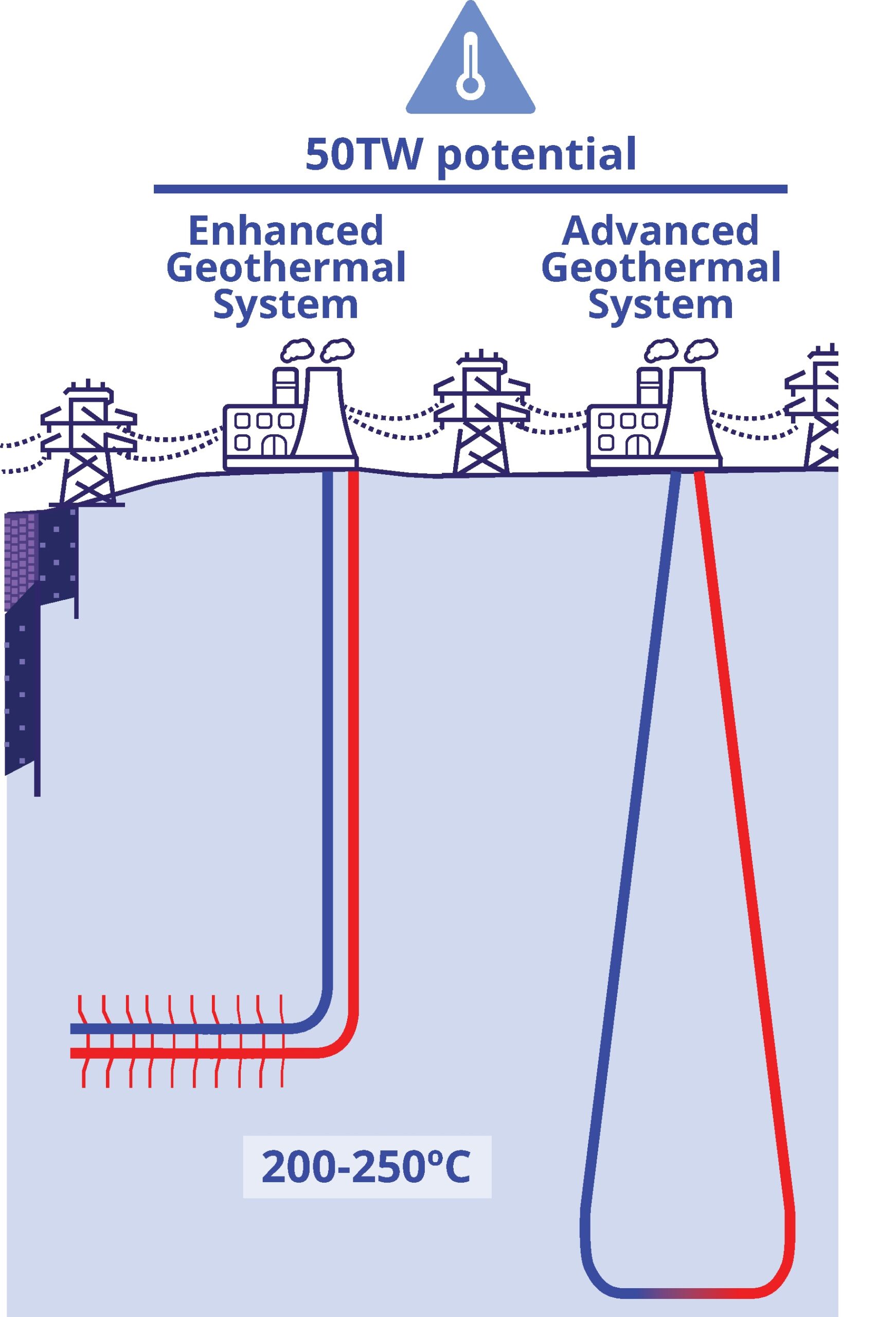
More recently, advanced geothermal systems have emerged as a possible alternative to conventional systems, breaking free of those traditional constraints. These systems, also referred to as closed-loop systems, use sealed, pump-free, conduction-based well circuits instead of fluid exchange with underground formations to deliver continuous electricity and heat across a wide range of geologies – even those that aren’t suitable for conventional geothermal development.
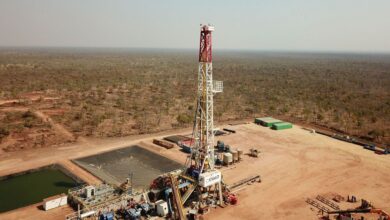
In December 2025, Eavor Technologies started delivering electricity to the power plant at Geretsried in the German state of Bavaria, approximately 40 km south of Munich. According to the company, the project represents the first successful commercial-scale application of Eavor-Loop, an advanced geothermal system centered around the connection of two vertical wells (Gel-A and Gel-B) with horizontal multilateral wellbores, which combine to create a closed system.
Unlike a conventional system, the Eavor-Loop’s working fluid (fluid injected into hot rock to absorb heat and create electricity) does not come from a reservoir. Instead, it is selected and added at surface, then circulated to harvest heat from deep in the Earth to be used to generate electricity or in commercial heating/cooling applications.
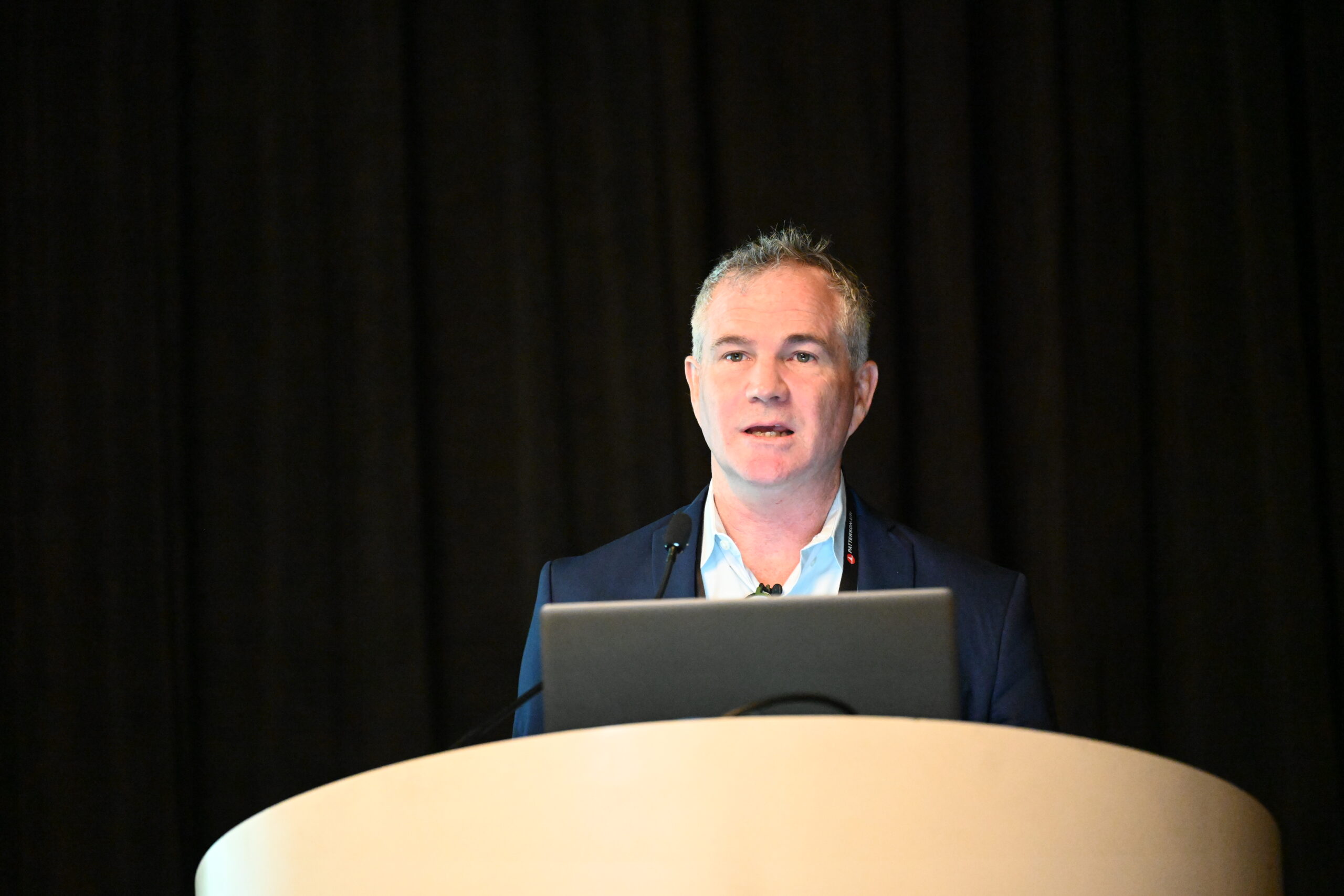
“I think the success of this project speaks for itself in terms of what we were able to do, especially if you consider the concept of ‘geothermal anywhere,’ ” said Blaine Dow, Domain Head – Drilling Engineering at SLB, which partnered with Eavor on the Geretsried project. He outlined the development of the project during a presentation at the 2026 IADC/SPE International Drilling Conference in Galveston, Texas, on 18 March. “In my mind, this was a renaissance moment for us as drillers, because we can see a pathway to a future where we can start to develop these different energy sources at scale.”
Geretsried project outline
The Geretsried field is the location of a failed conventional geothermal project in 2013, where the failure was attributed to a lack of reservoir properties needed for hot water to naturally flow. However, it was also this characteristic – the lack of water in the reservoir – that made Geretsried an ideal location to test the closed-loop system and see if it could work even in areas where geological conditions do not support geothermal drilling.
The closed-loop system at Geretsried consisted of two wells, each drilled to a total depth of 4,235 m through a combination of limestone and dolomite. The target reservoir recorded temperatures between 150°C and 170°C.
The wellbores, which were drilled 100 m apart from each other, had a series of six 3,500-m lateral pairs that intercepted at the toe, effectively creating a closed loop. Collectively, the network of laterals created an underground radiator, where water circulation through the loop brought the heat from the reservoir to surface.
Because the system did not utilize pumps, the operating expenses of a closed-loop system were anticipated to be much less than a conventional geothermal system.
This meant that, going into the project, the stakeholders understood that the biggest cost would likely be the construction of the wells. It was also understood that the total depth of the wells, combined with the pairs of 3,500-m laterals drilled from these wells, would likely lead to long drilling times. Therefore, from the outset it was recognized that optimizing the extensive drilling time needed – 107 days were initially planned – would be key to keeping the project economics under control.
Challenges and lessons learned
Ultimately, however, drilling of the wells lasted for more than two years, from July 2023 to October 2025, due to multiple technical challenges encountered.
The project utilized two land rigs from KCA Deutag (which was acquired by Helmerich & Payne in 2024). The deep vertical depth of the reservoir and extended lateral lengths required that each rig have a high-pressure fluid system (7,500 psi) and 2,000-hp drawworks with a hookload rating of more than 1 million lbs. The rigs were spaced approximately 220 m apart at the site, drilling simultaneously to ensure the lateral pairs could maintain optimum proximity through continued ranging and intersection. SLB monitored operations on both rigs from a digital service delivery center.
Because the well architecture required 8 ½-in. hole throughout the reservoir, four hole sections were needed to get to horizontal, beginning with a 28-in. hole just below surface casing (the other sections were 20-, 14 1/2- and 10 5/8-in.). These hole sections were exceptionally large for hard rock at shallow depth, which presented some technical challenges, Mr Dow noted.
There were also challenges around drilling dynamics throughout the top hole section because of the faults, folds and upthrusts present in the foothills where the wells were being drilled. There were several shock- and vibration-related failures of the BHA components.
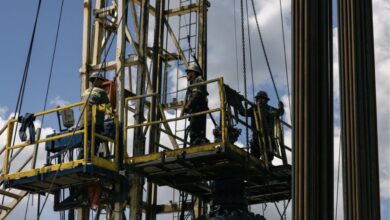
The team attributed these primarily to rig-related issues, such as with the top drive and drawworks, as well as mud conditions. The two rigs deployed in the project had seen little activity over the previous four years, and the drilling crews were all new and relatively inexperienced – there was a dearth of experienced rig personnel in the Geretsried area, Mr Dow said.
Additionally, the hard rock, coupled with the variable formations and layers of the rock, made trajectory control a challenge in both wells. Mr Dow said Eavor’s preference was to use powered rotary steerable systems (RSS) to achieve this, but that did not always perform well in hard rock. Alternate attempts were made with motors and even roller cone bits, which did not work due to differential sticking.
One of the biggest issues was the mud condition, as BHA and bit balling impacted cutting efficiency and weight transfer. The presence of oil and gas within the 14 ½-in. section of one of the wells had led to a kick in a vertical offset well used for rock strength analysis, Mr Dow explained. Because of this, that section required heavy mud (up to 1.9 SG) to manage the pore pressure. Using such heavy mud in such a large hole size introduced more complexity, as large volumes of cuttings had to be removed.
As the mud was water based, these cuttings were difficult to remove, leading to flow erosion on BHA components and the mud pumps. Often, both rigs were required to drill with one or two pumps offline, which led to periods of poor hole cleaning. When the driller reached a zone of abnormally high pressure, the heavy mud weight led to stuck pipe events – no BHAs were lost, but the stuck pipe events added nonproductive time (NPT) to the project.
Another challenge involved the whipstock system through which each lateral departed the wellbore through a whipstock set. Set inside the casing, the whipstock was designed to be set, then retrieved, once the lateral pair was completed. In total, 73% of the whipstock operations completed during the drilling of the lateral pairs were trouble free, making the program a success, but some issues that were observed. The departure BHAs had a tendency to roll upward off the whip face, Mr Dow noted, adding additional trajectory correction requirements for the drill-ahead BHA. Recovering the whipstock was also problematic at times, as the anchor packer could not always be released, leading to fishing operations.
“Those of you that are in the field can appreciate that whipstocks are generally an intervention service, not something we put on the critical path over and over again,” he said. “We had a lot of lipping, and we had some challenges with being able to get off the whipstock, recovering them after we were done with them.”
There were also challenges when it came to magnetic surveys. The high northern latitude of the drillsite (47°), when combined with the magnetic strength of the field (50,000 nanoteslas), created large error ellipses and a large residual magnetic azimuth error.
These factors compounded the wellbore position accuracy and steering complexity, especially given the magnetic sub that SLB and Eavor installed on the RSS for ranging and intercept.
This sub allowed the BHA to emit a magnetic signal that could be located with wireline ranging shots. On the first lateral, the large interference field from the BHA resulted in a high azimuth offset in each well. This led the driller to assume that the wells were above each other, but ranging showed they were not, which indicated a large drift in azimuth of both wells.
To help combat this issue, SLB and Eavor initially relied on a combination of gyro surveying and direction and inclination (D&I) surveying through the departure and drilling of the laterals, which was difficult to do in hard rock like what was found in the Geretsried field.
The use of a magnetic sub also required very deep wirelines with extended lateral extension. To bypass wireline entirely, Eavor developed a new ranging-while-drilling tool, Eavor-Link AMR, specifically for the project. The tool, which took the place of the magnetic ranging sub, enabled each BHA to communicate with one another through magnetic signals in real time. This technology, which was introduced for the last two lateral pairs in the project, reduced ranging time by more than 70% compared with the first four pairs.
“Although we were executing the same number of ranging shots, we completely eliminated the amount of time required to run wireline,” Mr Dow said. “This was one of the things we initially thought would be super challenging, but when you see a 70% reduction in ranging time on the last couple of laterals, with no trips, that’s a sign of continuous improvement. This was a noticeable level of success we were able to achieve.”
Once the well pairs were drilled and intersected, a proprietary completions fluid was displaced, creating a permanent sealing of any open fractures along the loop and assuring continuous flow for the system.
However, the fluid choice introduced some challenges from a drilling perspective, primarily with hole cleaning. Given the depth and length of the laterals, moving cuttings out of the well was not a simple task. As the wellbores were intended to support as many as 12 lateral pairs, a significant amount of casing wear was anticipated. To remedy this, the drillstring was restricted to less than 30 rev/min, further complicating hole cleaning.
The first lateral pair drilled saw instances of stick/slip and shocks due to high friction. However, those laterals were drilled successfully at an average speed of approximately 55 m/day. The second pair saw far worse hole conditions. One particular trouble spot came approximately 1,000 m from the casing shoe, ultimately leading to stuck pipe events. This trouble persisted on the next few pairs, as well. Hole cleaning sweeps and lubricant pills were proved ineffective in mitigating the issue. By the fourth lateral pair, it was determined the fluid system was not adequate.
Mr Dow credited an engineered water-based fluid, which was deployed later in the project, with helping to fix this problem. The final two laterals were delivered at an average of 280 m/day.
“When we shifted from clear drilling fluid to an engineered water-based fluid, things changed dramatically for us in the drilling phase,” he said. “One, we were cleaning the well much better. Two, as a consequence of us cleaning the well better, the drilling dynamics changed dramatically. We had less friction. We had a cleaner well and less stick/slip, and our drilling efficiency just evolved overnight.”
The fluid change happened at the same time that the drill pipe was changed, from a 5×5 ½-in. tapered string to a 5 ½-in. only drill string. This increase in pipe size also helped mitigate downhole dysfunctions, as the stiffer pipe reduced the fluctuation in torque that the drilling team had seen in the first four lateral pairs.
Mr Dow noted that although significant delays were encountered in the project, ultimately it was successful in delivering geothermal energy. While it took an average of 54.5 days to drill each lateral loop for the first four pairs, the fifth and sixth pairs were each drilled in an average of 16.5 days — a 70% reduction in drilling time.
This reduction, Mr Dow said, indicated a noticeable learning curve attributed to the corrective actions taken over the course of the project. He said the lessons learned from the project would be applied to future Eavor-Loop applications. DC
For more information, please see IADC/SPE 230698, “Drilling Performance Evolution in Advanced Geothermal.”