Focus on local capacity building can help ensure ‘the Namibian people win’ amid E&P boom
Building an efficient, sustainable offshore industry in Namibia requires coordinated effort to develop local workforce, supplier base
By Jessica Whiteside, Contributor
This could be a momentous year for Namibia’s emerging offshore oil and gas industry. TotalEnergies is expected to take a final investment decision on its Venus project in the Orange Basin, and Shell is resuming exploratory drilling in Petroleum Exploration License 39 after writing down $400 million on earlier discoveries last year. With first oil anticipated by 2030, both government and industry are taking steps to ensure that the oil and gas value chain be staffed and supplied, at least in part, by Namibians.
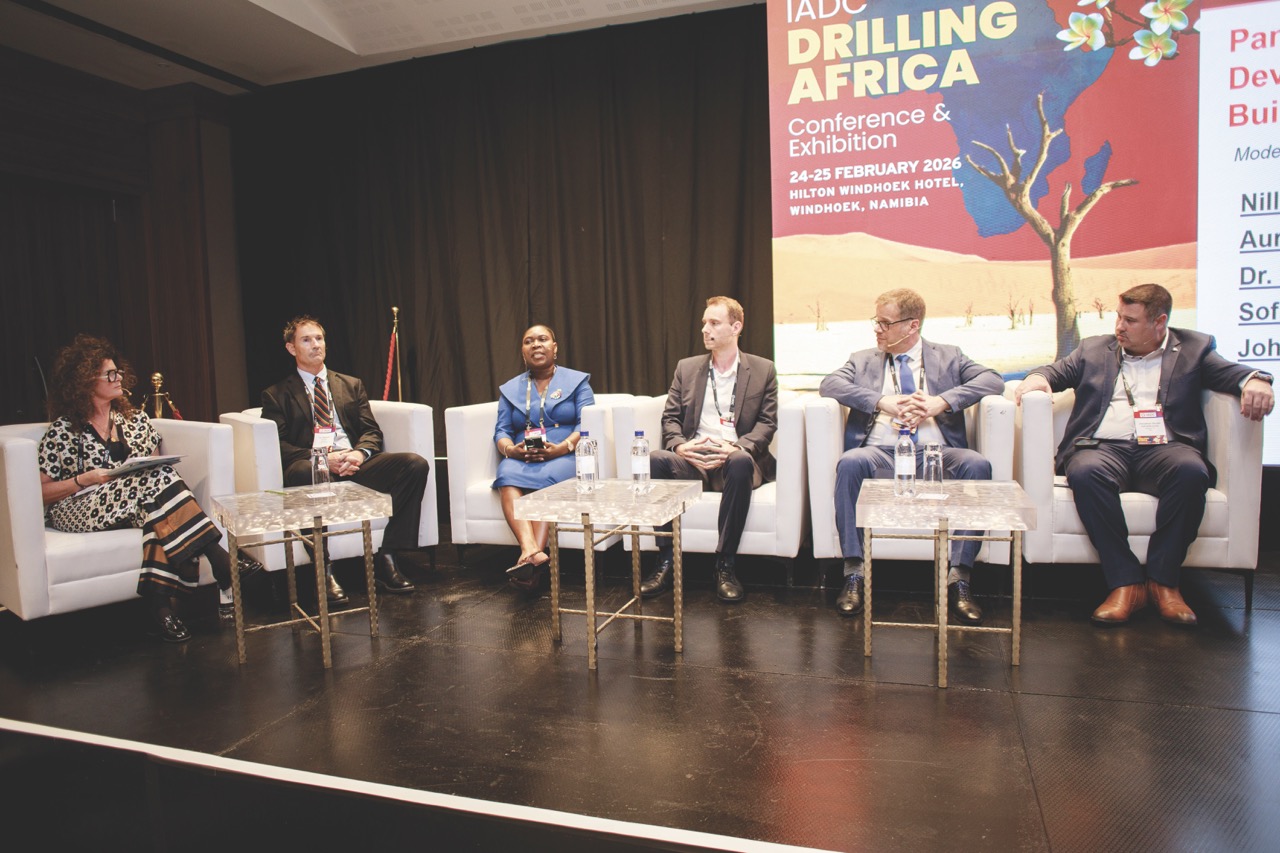
Upstream activity, and drilling in particular, is a high-risk industry requiring high capital expenditure and a high skill set, but “that doesn’t mean that it cannot be developed in country,” said Aurélien Joathon, Director of Operations for TotalEnergies Namibia. He spoke as part of a panel discussion on nationalization and workforce development in Namibia’s offshore at the IADC Drilling Africa Conference in Windhoek, Namibia, on 24 February.
Mr Joathon emphasized that there are already skilled individuals and companies in Namibia with proven ability in the upstream, but some will need more time than others to scale up to meet the demands of the country’s still-nascent sector. “You need the Namibians to do it,” he said. “You can come with expatriates and foreign companies and do exploration, but that will never be sustainable.”
Investments in upskilling
The Namibian government has been investing for decades in capacity building for local workers in anticipation of hydrocarbon development. In 1992 it established Petrofund, a government body funded by contributions from petroleum exploration license holders. The vision was to create “a playing field where local capacity in terms of workforce is high, suppliers are prepared to participate, and institutions are ready to serve,” said Petrofund CEO Nillian Mulemi.
To that end, the group provides scholarships to students in oil and gas-related disciplines and facilitates internships and on-the-job training via agreements with operators and service providers. It also works to strengthen the capacity of local suppliers to meet the industry’s needs.
Speaking on the panel, Ms Mulemi urged drilling contractors to collaborate with Petrofund to come up with programs and plans to accelerate training.
“We have a joint responsibility to make that happen, and we are available as an office to provide the necessary facilitation and, where we can, collaborate so that we can realize the same vision as a team,” she said.
More than 400 Namibians have received training in different oil and gas roles through Petrofund initiatives. Many were deployed outside of Namibia so they can gain specialized experience and now hold senior roles in the country’s national oil company, NAMCOR, as well as in international oil and gas companies. Companies seeking local talent for exploration and development activities can subscribe to Petrofund’s PetroConnect platform, an online database housing the CVs of Namibians with specific skillsets.
“It’s an opportunity for you to get candidates as fast as you can from wherever you are in the world,” said Shoki Kandjimi, Communications and Stakeholder Engage-ment Lead for Petrofund.
Career awareness
Part of workforce development in a country new to oil and gas is helping potential recruits understand what skills they need to work offshore. To address this, ICM Group and Northern Ocean jointly held the Green Helmet Program in Walvis Bay, Namibia, in March 2026. The two-week program aimed to raise awareness of oil and gas careers among young Namibians with vocational certification or an engineering degree.
It introduced a dozen participants to practical HSE-focused training, including first aid, firefighting, and working at height and in confined spaces, along with oil and gas-specific environmental training, said Sofiane Bennaceur, Operational Excellence – Managing Partner, ICM Group. They also received presentations on technical topics such as well control.
One program participant, Janeth Awala, shared on LinkedIn her experience visiting Odfjell Drilling’s Deepsea Mira semi and how it allowed her to connect theory with real-world operations in the offshore environment.
“This experience provided first-hand exposure to the oil and gas industry and a deeper understanding of the safety culture that drives every offshore operation. Safety isn’t just a guideline — it’s a core value, and witnessing this in action was truly inspiring,” she wrote in her post.
Leadership skills development
During the IADC Drilling Africa panel, Tim Wigham, Head of Safefficiency at Exceed, highlighted the need for programs to help young professionals develop non-technical skills that could complement their technical competencies. These might include leadership, team effectiveness, situational awareness and human performance skills.
On a project in Ghana for Tullow’s Jubilee field development, for example, Exceed developed an engineer competency program that took government-sponsored young drilling engineers to Scotland and to offshore rigs. By pairing these young engineers with more experienced expats, the program aimed to speed up the learning curve and enable locals to eventually take over roles from expats.
The experience also saw the young engineers work closely with local crews.
“Building that rapport and leveraging off each other between the engineers and the drill crew is another critical factor to accelerating the learning curve and accelerating the integration of local crews to become confident in their craft,” Dr Wigham said.
Local content successes
Northern Ocean has drilled 15 wells in Namibia for multiple operators and is set to take on another this year for Shell with the Deepsea Mira rig, managed by Odfjell Drilling. Empowering and training local crews has been an important part of the company’s success, said Johnathan Shows, Operations Manager for Northern Ocean.
“It’s people first,” Mr Shows said at the conference, calling the local crews engaged and capable. “Currently we have around 46 Namibians on board the rig getting ready for the Shell campaign.”
The company has also collaborated with more than 40 local vendors, leading to local procurement of 65 million Namibian dollars in just Q4 2025.
“It’s important to have those kind of partnerships and strategic alliances with the local vendors to allow them to be able to grow,” Mr Shows said. “We’ve seen an amazing economical value in that.”
In 2024, ICM Group provided a junior workforce of 50 personnel for the Noble Venturer drillship, some of whom were Namibians who had previously trained and worked in Indonesia. While the drilling campaign stopped after six months, the local crew proved to be extremely capable, said Mr Bennaceur. His organization is looking for opportunities to further develop the local workforce and to progress individuals to higher positions.
“There is no excuse anymore – for instance, for a drilling contractor or a service company – to say, ‘I cannot find junior personnel,’” Mr Bennaceur said, pointing to the PetroConnect database as a source for talent. “They are very willing, motivated and skilled crews.”
Localization challenges
Mr Shows acknowledged that the start-stop work cadence during the exploration stage “kills the local content.” Not only does the drilling rig sit in Walvis Bay losing millions during periods of inactivity, but the workforce also gets laid off and local vendors don’t get new business.
“For the future of Namibia and for any drilling contractor to be able to have services here, it’s very important to have sustained activity,” he said.
Further, a lack of continuous work means organizations need to manage the expectations of local professionals seeking to build a career in oil and gas, because there may not be a job opportunity as soon as they finish their training and development, Mr Bennaceur noted.
However, the environment should improve once the country moves into the development stage, Dr Wigham said. At that point, long-term schedules for operators and rigs “will then allow crews to genuinely evolve, develop and build up competence and experience.”
High stakes
There’s a lot riding on the success of this emerging industry: Namibia’s latest five-year national development plan describes oil and gas as “a potential transformative opportunity for economic growth and sustainable development.” The plan aims to improve local participation throughout the oil and gas value chain, setting a target of 22,800 jobs in the sector by 2030, up from 2,800 in 2024. It calls for local content and carried participation in oil and gas to rise to 15% by 2030, up from 10% in 2024.
In March 2025, Namibia published the final draft of its National Upstream Petroleum Local Content Policy, which outlines the government’s expectations for local participation and a framework for achieving them. Promoting local content will be one of the responsibilities for Namibia’s new Upstream Petroleum Unit, established last year within the Office of the President as part of proposed amendments to the Petroleum Act.
According to Mr Joathon, workforce nationalization will be a key enabler for Namibia to transition from exploration and appraisal to something much more important: a potential new oil and gas production hub for the western region of Africa, a vision shared by a number of operators and contractors. An ambitious approach to capacity building with coordination among all stakeholders and guidance from the government is needed to realize that vision because a strong local workforce and supplier base would attract investment and unlock future projects at a faster pace.
“We are all going to win collectively when the Namibian people win,” Mr Joathon said. DC