Aging jackup fleet, dim potential for newbuilds set scene for supply scarcity in coming years
ADES prepares for critical change in offshore market dynamics through asset acquisitions and investments in people, technology
By Linda Hsieh, Editor & Publisher
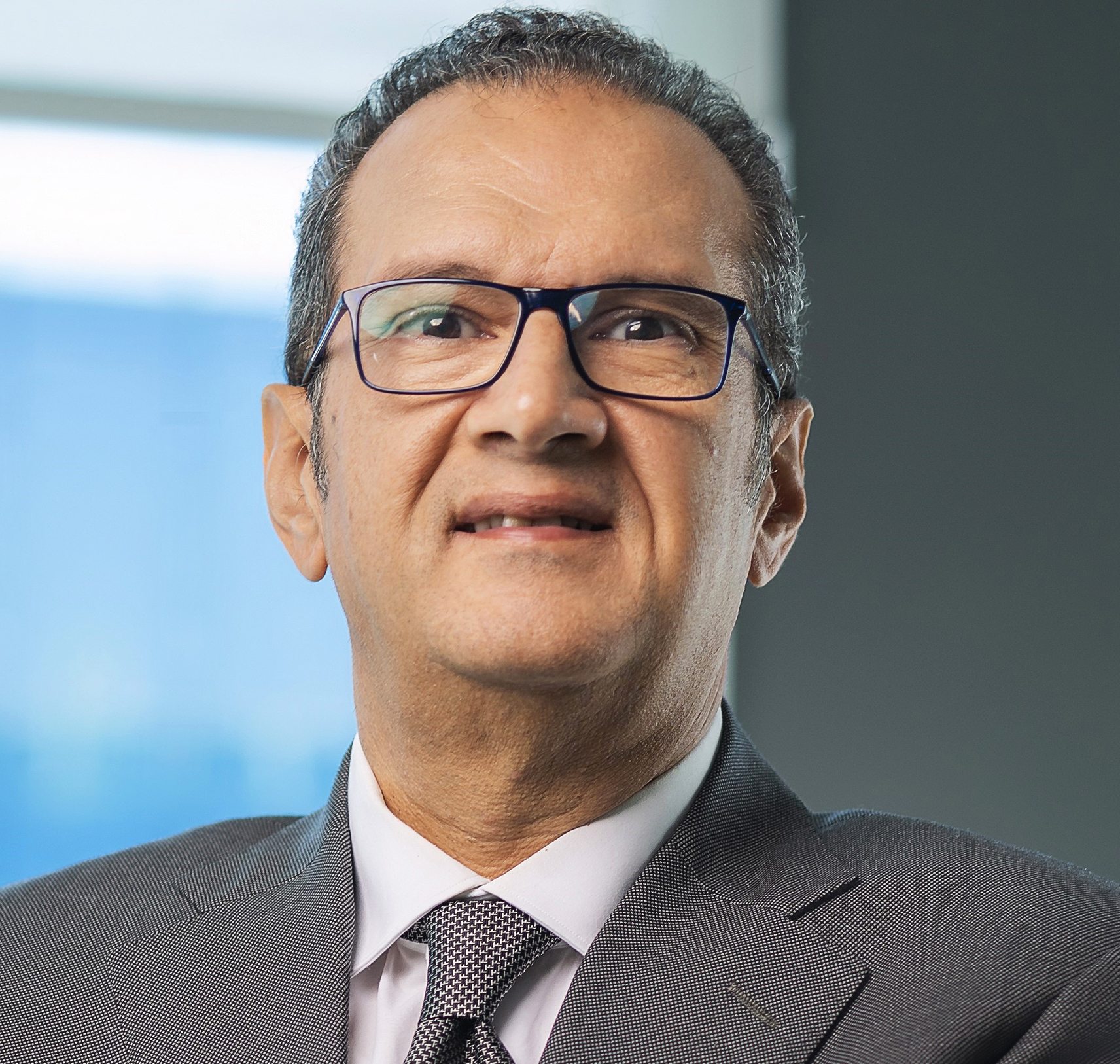
Mohamed Farouk is Group CEO & Vice Chairman of ADES Group.
From your role as CEO of ADES Group, what comes to mind as the top one or two issues that are most critical for drilling contractors right now?
Safety has always been and will always remain our greatest responsibility and concern. We view it as our license to operate. Nothing we do is more important than ensuring that our employees return home safely at the end of the day. That’s very important.
The second critical thing is that we have to remember the industry is fundamentally a people business. Finding, developing and retaining the right talent is becoming increasingly challenged.
At ADES, we continue to invest in training and capability building. In Saudi Arabia, for instance, we partnered with the Saudi Arabian Drilling Academy, or SADA, to train and develop a good number of trainees every year who are then incorporated directly into our operations. An important part of this is nationalization and local value creation, which have become more and more important in many of the countries where we work.
Finally, I believe that scale is very important. Having scale will help us to have the right platform and be the global champion in offshore shallow-water drilling, so we can operate and provide the right, reliable service to our clients and play a role in energy security.
In what ways do you see the drilling market evolving over the next few years? And how is ADES working to keep up with those changes?
Looking at recent reports from the International Energy Agency on depletion rates and the investments required, we can see that the world will still rely on oil and gas for decades to come. With that said, we expect to see a continued consolidation among drilling contractors.
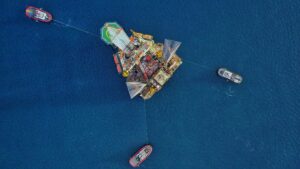
At the same time, I don’t think there will be any more of the speculative offshore newbuilds that have happened in the past. That is a very important point, considering that almost one-third of the world’s jackup fleet will be aging significantly over the next few years. We believe that there will be a crunch in the supply of jackup rigs, which – from an operator’s perspective – will shift their bottleneck from reserves to the availability of high-spec rigs and contracting visibility.
Up to now, I don’t think people are really realizing how much of a problem this will be. There are close to 400 jackups today, and if 100 of them retire over the next seven to eight years, we are talking about 300 jackups left. And guess what? Utilization of the 400 jackups today is above 90%. You also have to keep in mind that most of the development for future reserves will come from shallow offshore reserves, which will put a lot of demand on those rigs.
That’s going to create a real bottleneck where operators may find that they have the reserves, but they don’t have the assets to develop them. I think that’s a very important point that needs to be highlighted.
On that note, ADES has been moving very strongly on consolidation and acquiring assets. We are also going into different locations and investing in technology in order to make sure that we are ready for this new phase when it starts to surface.
In what time frame do you think we’ll start to see this new phase?
I think within four to five years we’ll hit 100% utilization on jackups. It’s already been in the 90% range for about a year and a half, and that’s without the aging and scrapping, which is expected to happen over the next seven to eight years. That lack of availability of assets will have a significant impact on production.
Do you see more operators becoming concerned about this?
Some of them, yes. TotalEnergies, for instance, has a lot of activities in deepwater, and last year they acquired 75% interest in a Vantage Drilling drillship while also contracting that drillship for 10 years. I think they started realizing that it would be a more beneficial approach, not only from a financial standpoint but also from the perspective of asset availability.
That’s on the deepwater side, but I think more operators will soon start to realize this on the jackup side, as well. We are already starting to see a trend in Southeast Asia, for example, with some operators pushing contract durations longer than the typical one to two years; they’re starting to ask for three to five years. So, I think that they are getting it, but I don’t think it’s at the right pace yet.
What do you think drilling contractors could be doing to make their organizations less sensitive to short-term fluctuations in the market?
I believe it’s affordability. For operators, if the assets are available and if they can afford to pay for the daily rates of the assets to drill, I think they will continue drilling, even if the oil price drops 10-20%. So, if we put aside the problem I mentioned around the crunch in supply, I think it’s about affordability, and that means we have to be very cost competitive.
There are two kinds of operators. One takes a more short-term, speculative approach, working on higher daily rates for shorter periods. In my opinion, this is a company that focuses on their investors first. We are on the other end, where we focus on our client as the first priority, because we believe the shareholder will benefit from that later on. That means we need to really focus on the fundamentals. It’s all about agility and readiness to adapt while also continuing to grow. We remain focused on our core values, as well as on cost discipline and operational flexibility. We maintain our cost-effectiveness by using the right digitalization for efficiency, the right analytics for supply chain, the right maintenance technologies for reducing nonproductive time (NPT), and the right talent pool. Ultimately, that provides affordability for our clients while maintaining the highest standards of safety and operational excellence.
I can give you an example. When our client in the KSA decided to suspend 35 rigs, even though we had the highest market share in that market, we were one of the least affected. That’s because our daily rates were very competitive compared with others for the same assets and for equal or better services. At the end of the day, when a client decides to suspend rigs, they will suspend the ones with the highest daily rates first.
Consequently, we were able to keep a huge backlog. Today, we have one of the highest backlogs in the industry – circa $10 billion after the acquisition of Shelf Drilling. This $10 billion allows us to weather volatility in the market, and we have it because we are providing the right service with the right safety records, but more importantly, it is affordable to our client with the right cost for services.
Can you elaborate on how you’re going about achieving further cost reductions? You already mentioned a few things like analytics, technologies and using the right people.
I think we must have a lean organization structure with the right people to support cost efficiency. Consolidation is very important here, because consolidation allows you to have the right scale, and this economy of scale allows you to have a better and stronger partnership with original equipment manufacturers (OEMs) to reduce pricing and have visibility on the supply. Building a strong base for in-house engineering and maintenance is also critical for us. That’s something we’re never going to outsource.
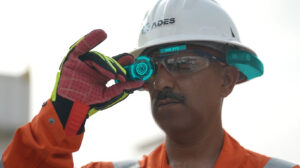
Finally, we have to focus on operational excellence because that’s what will ultimately lead to reduced flat time and NPT. We’re using new technologies like Rig Eye, which visualizes operations in real time by people on the rig. That allows for improved safety, but it also reduces unplanned downtime and enhances maintenance planning. All of those factors together are helping us reduce costs.
What are your main considerations when deciding how to prioritize different areas for capital allocation for ADES?
We have two kinds of CAPEX – growth CAPEX and asset integrity CAPEX. Over the last few years, we have put a lot of our CAPEX into the first category, and as a result we have been growing significantly year over year. By the end of this year, we may be looking at almost 40% year-over-year growth, compared with 10% over the last couple of years, because of the Shelf acquisition.
Over the next period, we will be focusing more on CAPEX toward asset integrity, which will allow us to keep our leadership by operating safely and by optimizing investments into reliability and ensuring that our assets are consistently maintained in excellent condition. But in all of this, we always keep in mind that we will allocate our CAPEX into niche markets. Either it is a technology-driven market, where we have an advantage, or – as you have seen – most of the growth that has happened over the last few years were in the offshore sector, where I mentioned there is going to be a scarcity of assets.
ADES has grown significantly in the past few years, most recently with the acquisition of Shelf Drilling as you mentioned. What strategic decisions or market conditions are driving this growth?
We believe that consolidation is healthy for the industry. It enables both operational and financial synergies and creates stronger, more resilient contractors. Combining two strong entities like ADES and Shelf is particularly beneficial for our clients. It offers greater reliability, better scale and better technical depth. It also reinforces our ambition to become the drilling partner of choice for the industry.
Beyond the size, it’s also about having good people. With the combined company, we now have almost 11,500 employees, with a more diverse talent base. That provides deeper technical expertise across rigs and geographies, enhanced career growth, mobility and collaboration – and a stronger organization at the end.
As I mentioned earlier, the jackup market is structurally tight, with high utilization and limited newbuilds. Expanding our fleet and geographical reach increases operational flexibility and positions ADES to support customers as drilling programs scale in complexity. The integration also strengthens our ability to serve long-term production programs, which are less sensitive to short-term price swings.
Further, ADES is a Saudi company, and Saudi Arabia stands as a global leader in energy security. Our mission is to support this objective, with drilling being a critical link in the value chain of energy production. Having a global champion like ADES strengthens and complements this mission, reinforcing the Kingdom’s leadership in energy security.
I wanted to ask a little more about the Shelf acquisition in particular – do you see any challenges in terms of integrating the two organizations and making the two work in sync?
Any change, by nature, is difficult, but I believe that we are doing it very wisely in the sense that we are not in a hurry to make huge changes. We are running business as usual, without making any abrupt changes on the rigs, and we are making sure that key talents are well managed and retained. It’s important that the client doesn’t feel any change. Actually, they should feel better support and more flexibility.
Additionally, we are bringing best-in-class advisers into the post-merger integration, or PMI, to look at what is best for the company in the long term. We are taking it in a very methodical way.
Once this PMI is done and you become a fully integrated company, how do you think ADES will become different over the next few years? It will of course be a much larger company with a much larger global footprint.
We will continue providing the most reliable jackup drilling service, and we’ll continue to pursue growth opportunities selectively, ensuring we create value for our shareholders and clients. We will continue to be the partner of choice and continue playing a key role in energy security.
And we will always look for niche markets that may be growth opportunities in the future. We will focus on offshore but also keep attention on key onshore markets, particularly those with deep drilling, like in Kuwait or the gas fields in Saudi Arabia or Algeria.
What about in terms of ADES’ relationship with operators? How do you see that changing in the coming few years?
We really want to move from being just a contractor bidding and being in the pre-qualification list to being a technical and commercial solution provider and partner for the client. We are already such a player today with key clients – Saudi Aramco, Kuwait Oil Company, Sonatrach, ONGC, Qatar Energy, EGPC, Pertamina and PTTEP, to name a few. Those are the NOCs, but we also have special relationships with IOCs like TotalEnergies, ENI, Chevron, Equinor and Shell.
I think that, by having a bigger scale now and having the expertise focused in one place, we will be better able to build these strategic long-term partnerships, which will result in win-win situations. We will be able to plan better, which means we can be more cost effective because we have better visibility of the business and how we can invest for a longer term.
Going back to what you talked about with the tightness in the jackup market, do you actually see potential for newbuilds to happen?
The likelihood is very low. First of all, you would need to have $300 million to invest in the newbuild, and you would need to put in at least 50% upfront, or even more, because shipyards have been burned in the past by just accepting 10-15% down payment. On top of that, you need to wait three years until the rig is completed, so it would need to be built on speculation, because no one will give you a contract and wait three years for the rig.
Further, a lot of the shipyards have eliminated the offshore jackup business from their activities. They are focusing more on LNG tankers, vessels and other more bread-and-butter businesses. That means the expertise in rig construction is not there.
Even if you are brave enough to build on speculation, you need at least a daily rate of $200,000 for at least 10 years to cover your $300 million investment, which I think doesn’t exist today.
You can understand why we see a structural bottleneck in the supply, and that will shift the problem for producers from availability of feasible reserves to availability of jackups in the coming years.
I want to talk a little bit about automation and digitalization. How do you think technologies like those have affected or will affect the way that ADES operates?
Both automation and digitalization have had a profoundly positive impact on ADES’ operations both offshore and onshore. We started our journey with a strong emphasis on safety, but a few years ago we introduced the AI-powered Rig Eye platform, which has been instrumental in this regard. Through it, we implemented a fully automated early detection system that identifies unsafe acts and conditions. This proactive approach has significantly reduced our exposure to risks, protecting both our people and assets.
Additionally, Rig Eye has enhanced our analytics capabilities by mapping patterns and trends, leading to significant breakthroughs in incident prediction and prevention.
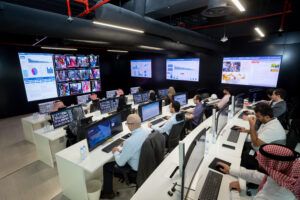
We then expanded this capability by establishing the state-of-the-art AI-enabled Operational Command Center, or OCC, which has transformed how our rigs are monitored and supported. The OCC is a 24/7 real-time monitoring hub that works in relation with Rig Eye, where its role is to oversee rig operations remotely and intervene when unsafe practices occur. This allows us to de-risk operations and maximize uptime across the fleet.
We have digitalized many critical workflows, from fleet planning and rig procedures to crew performance management, procurement, budgeting, spend control, sustainability and compliance. This is all helping to improve organizational efficiency and agility.
Looking ahead, we see three innovation areas reshaping the sector. First, artificial intelligence at the rig floor, particularly hands-free systems and integrated control platforms that enhance both safety and consistency. Second, data-driven asset integrity, where sensors and machine learning models allow contractors to optimize maintenance windows and extend asset life economically. And finally, connected operation, where onshore command centers bring together OEMs and rig crews to work as a single decision unit, improving efficiency, reducing cost, and strengthening our contribution to global energy security and sustainability.
For ADES, these innovations are not just abstract ambitions – they build directly in our scale, our digital foundation and our role as a Saudi global champion operating globally. They will define how we continue to deliver reliable, safe and efficient operations for customers in a world where rig availability and execution discipline matter more than ever.
In the next few years, where do you see the biggest opportunities for ADES to continue to grow or to differentiate itself from competitors?
From a growth perspective, we continue to see strong opportunities in the jackup segment, driven through consolidation by asset scarcity and an aging fleet. We also recently launched a production management business focused on mature brownfields. We piloted this model in Egypt, investing in seven fields. We are leveraging our local presence, rig access and service partnership to increase production while creating a new revenue stream. We intend to replicate this model in other regions where conditions are favorable, with a separate and dedicated organization from our drilling business.
Those are opportunities on the business side, but beyond that, what we are offering is really about safety and operational excellence on the rig level. Today we operate in 20-plus countries. Our diverse fleet is mixed between onshore and offshore, which gives us a wide range of focus. More importantly, we have a mix of regional and global talent that represents one of the strongest talent pools in the industry.
We’re also differentiating by bringing an operator-like perspective to drilling, blending execution capability with deep understanding of how rig availability, contracting visibility and discipline planning support our customers’ long production programs. This is very important for both NOCs and IOCs.
Finally, we are part of the Saudi mission, both on the global side, being a cornerstone in the world’s energy security, and locally with Saudi Vision 2030, by bringing hard currency to Saudi through our global operations.
What does sustainability mean in practical terms for a drilling contractor like ADES, and where do you see the biggest opportunities to reduce environmental impact while maintaining safe and efficient operations?
For ADES, sustainability is about operating more efficiently, responsibly and transparently, while continuing to support global energy needs. We have made tangible, measurable progress across our fleet through energy efficiency. Around 45% of our rig lighting today has already been converted to energy-efficient LED systems, and we are in the process of deploying battery energy storage as a pilot. Technology plays a central role. We are leveraging AI-driven engine monitoring, real-time digital dashboards to track energy use, and advanced data analytics to reduce waste and improve fuel efficiency.
These initiatives improve both environmental performance and operational reliability, which ultimately benefit our customers. We see sustainability not as a separate agenda but as an extension for safe operations, disciplined asset management, and long-term value creation for our customers, shareholders and the communities we are in.
In 2023-2024 you executed one of world’s largest deployment of jackup rigs for your client in Saudi Arabia. Can you share some insights about this mobilization?
I think this was something very unique. In 2022, our client in KSA came up with a requirement of 40 jackup rigs across three tenders, out of which 19 were won by us. They wanted to increase crude production at that time from 12 million barrels per day to 13 million barrels per day, and almost 800,000 barrels of that additional 1 million barrels had to come from offshore. To unlock that future, our client needed partners who were willing to dream big and deliver big, and that’s when ADES stepped forward.
The award for the 19 jackup rigs to ADES and the mobilization of the same was the largest offshore rig deployment program ever attempted anywhere in the world. No drilling contractor in the history of this industry had ever done anything close to it.
Most would have hesitated, and many would have said it was impossible. But at ADES, we saw a challenge worthy of our ambition. It felt like a Netflix documentary: 19 rigs in 19 months. Yet we moved forward, even though the challenges were relentless. Number one, we had to acquire 19 stacked rigs from all over the globe. More than 2,000 people had to be hired, onboarded and trained, including a significant number of young Saudi nationals. We were sourcing critical equipment from all over the world, even while the global supply chain was still recovering from COVID-19. Shipyards were congested, slot availability was tight, and delivery timelines were brutal. We had to use close to five shipyards at the same time to deliver this. Every week felt like a race against physics, logistics and time.
But this is where the ADES spirit emerged, with coordination, collaboration and the belief that we could pull it off, and we did. We were able to mobilize 19 rigs in 19 months, one after the other, like clockwork, each one delivered safely, professionally and on time.
There were challenges, there were sleepless nights, and there were plenty of lessons learned, but what remained stronger than anything else was the confidence we earned as a unified organization. A new belief took shape inside ADES: If we could do this – the biggest deployment in offshore drilling history – there is nothing we cannot execute.
This project didn’t just change our potential operational capability – it changed our mindset, it changed our culture, and it changed our confidence. DC