Equinor explores changes to driller’s cabin design to boost performance, driller’s well being
New cabin layout concepts proposed after identifying pain points around screen clutter, information overload and physical strain

By Stephen Whitfield, Senior Editor
Computer-based systems, automation and remote control are increasingly replacing manual operations in drilling and completions. With the driller’s cabin at the center of this changing workspace, the industry sees the need to provide an optimal environment for the driller that promotes individual performance. To that end, companies are increasingly taking human factors into account in looking at the design of the driller’s cabin.
“Human factors can be looked at as a means to optimize human well being,” said Elisabeth Arndt, Human Factors Engineer at Equinor. “It can be applied to physical ergonomics, cognitive ergonomics, organizational ergonomics and even safety culture. When human factors are not addressed in the design of a workplace, it often ends up in poor design. And this poor design can lead to incidents.”
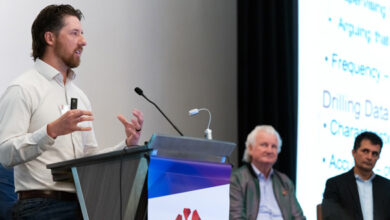
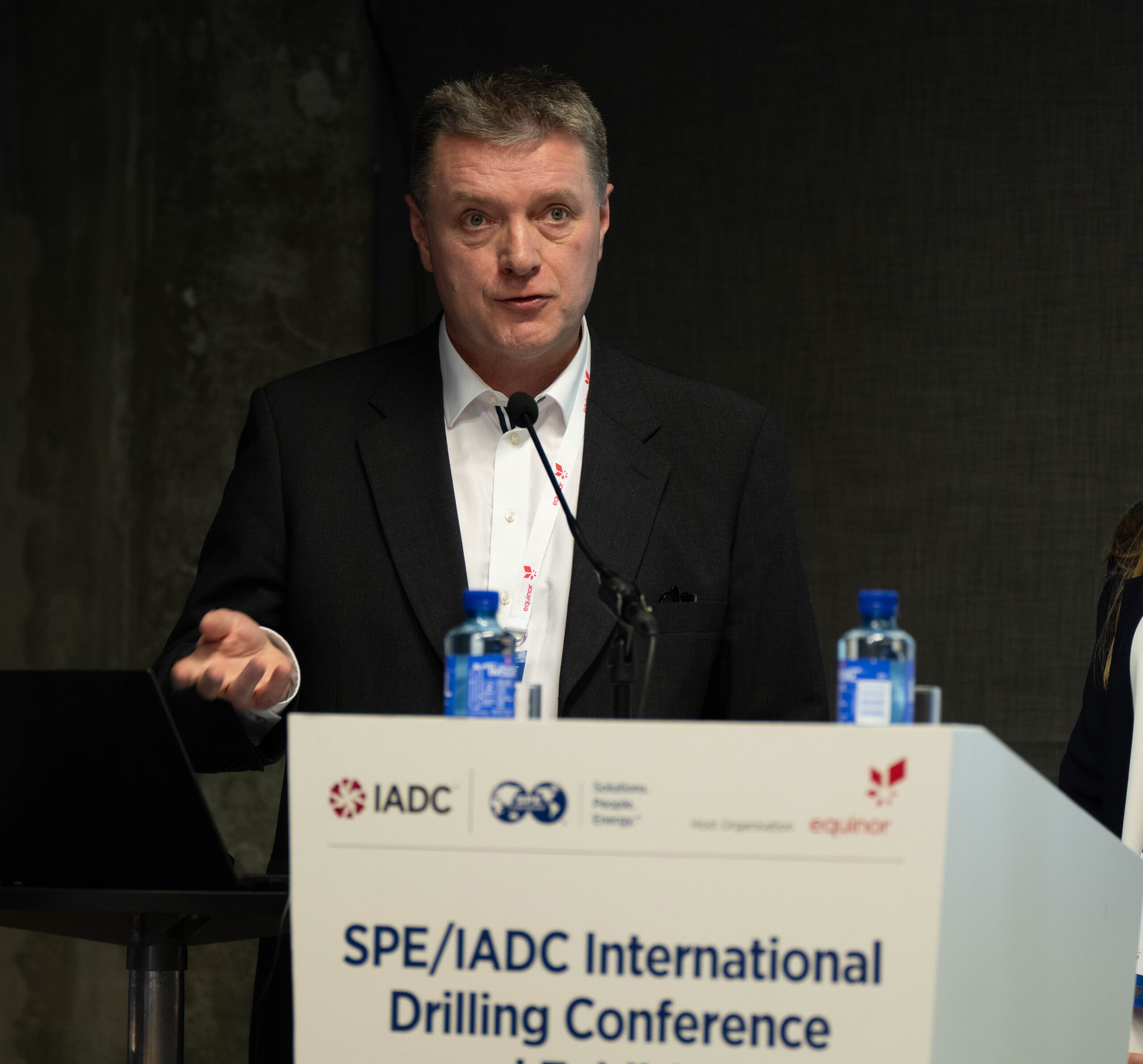
Speaking at the 2025 SPE/IADC International Drilling Conference in Stavanger, Norway, in March, Ms Arndt and Svein Harald Gabrielsen, Advisor, Digital Solutions at Equinor, explored how changes in the driller’s cabin can affect a driller’s performance. They even suggested future design concepts for a human-centered driller’s cabin. Further, the two provided best practices around the implementation of “human-centered” changes to existing driller’s cabins.
For this project, an interdisciplinary team of experts in human factors, design, drilling operations and regulatory compliance conducted interviews from January to March 2024 with drillers and assistant drillers at Equinor’s offices, along with visits to four offshore rigs.
For the office interviews, the company asked 65 questions centered around the physical layout of their driller’s cabins, human-machine interfaces (HMIs), communication, workdays, tasks and responsibilities, organization, training, and a general reflection about the challenges of working within the driller’s cabin and the improvements they would like to see. Additionally, Equinor conducted a “pain assessment” mapping of the area and the intensity of various pain points for the driller and AD after a 12-hour shift in the cabin.
For the offshore rig visits, a human factors SME from Equinor observed the drillers interacting with their environment over the course of one to four days – the length of time depended on whether the rig was in operation or under maintenance. The SME would then answer 15 questions regarding physical layout and HMIs. Interviewers also surveyed toolpushers, roughnecks, service company representatives and drilling supervisors.
Interview results
The observations and answers from these interviews were categorized into three main categories.
One category was screens and displayed information. One of the key observations from the interviews was that the implementation of new technology on the rig usually resulted in the implementation of a new screen in the driller’s control panel, instead of integrating the new technology into existing systems. Drillers were surrounded by numerous screens – ranging from nine to 12 – around the driller’s chair and several input devices.
“One driller told us there has been a big increase in the number of screens and equipment since they started in this industry. In the beginning, there were four screens, all connected to the drilling control system. Now, with too much information, it’s easy to lose track of what is important. It’s easy to lose focus. That is quite a strong statement from a driller,” Mr Gabrielsen said.
Having numerous screens meant there was a high amount of information to be monitored and controlled. Drillers reported difficulty prioritizing and focusing on the most important information due to the amount of information surrounding them.
Due to limited space, screens were also sometimes placed in suboptimal locations relative to the driller. Screens positioned in front of the cabin windows reduced access to daylight and impaired the view to the entrance of the drill floor. Other screens were located in front of the BOP panel, emergency buttons or the emergency exit. Several screens were placed farther away, making it difficult or impossible to read some information presented on these screens while sitting in the driller’s chair and sometimes causing eye strain, according to the drillers.
Some drillers on one of the rigs visited even reported neck strain due to screen positions requiring frequent one-sided head movements.
The second category was ergonomics and work environment. With 12-hour shifts, the driller can be bound to his or her chair in a static or repetitive work posture, and small ergonomic incongruities could have a significant impact on the driller’s well being.
While the driller’s chair is usually adjustable to the size of the driller, it wasn’t always possible to maintain a comfortable position for joystick operation while also maintaining a clear view of the drill floor.
Moreover, although it was possible to move the seat backwards to ensure a comfortable position handling the joysticks, interviewees noted that moving backwards usually decreased their view of the drill floor. Some chairs lacked height adjustments for armrests, leg support and neck support, causing uncomfortable working positions and increased physical strain
Attached input devices such as joysticks and trackballs were reported to be uncomfortable to use, causing strain on fingers and shoulders.
The third category, work tasks, encompassed several factors that contributed to distractions from the driller’s core tasks. These factors included noise from coworkers and systems, the placement of screens, alarms, administrative tasks and communication devices.
On top of these three categories of observations, Mr Gabrielsen noted other contextual factors in the driller’s cabin that affect performance. “Efforts for greater efficiency, rig safety standards and increased automation have been driving investment in new technology, and these technologies are all in silos. Everything is being developed independently of everything else. There’s a lack of overall system perspective in bringing new applications to the rig floor,” he said.
Design concepts
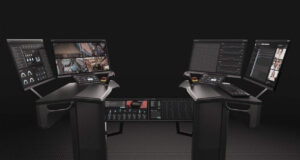
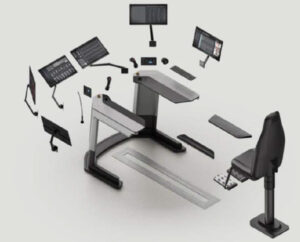
Following the interviews, the Equinor team developed three design concepts for the driller’s cabin: the unified digital workspace, the dynamic physical workspace, and the cabin built for change.
The unified digital workspace addresses the challenge of screen clutter and information overload. It enables multiple systems and applications to share displays, along with a single input device for operating the systems. A display management system is also a part of this workspace, allowing vendors to have their systems alongside others.
“With the unified digital workspace, we’re focusing on digital systems that share screens and data. That way, you can reduce the amount of information the driller has to see. It must be operation sensitive, so the system needs to automatically understand what the operation is and pull up the relevant information, like for a flow check or a connection. The setup should change automatically so that the driller doesn’t have to go into a file menu to choose the correct setup,” Mr Gabrielsen said.
This workspace also establishes a scalable and modular design open to all vendors. The design is a collection of reusable components and guidelines aimed at creating consistent designs across digital interfaces and applications. The Equinor team said this design should also support features like day/night modes and accessibility options for aging workers.
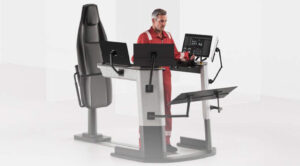
The dynamic physical workspace focuses more on ergonomic design. It emphasizes flexible work postures during long shifts, with a setup that separates controls, armrest and screens from the chair. This allows drillers to alternate between sitting and standing. Screens are arranged and mounted on flexible arms on a workstation and placed low enough to ensure a clear view of the drill floor and the redzone.
“The main change with this workspace is that we’re moving all the technical functions out of the chair and putting them on the workstation,” Mr Gabrielsen said. “This workspace can be adjusted to accommodate different body sizes and the need for a diverse workforce. We wanted to place the screens in a position where we could make critical information accessible for the driller without too much eye and head movement.”
The concept of a cabin built for change emphasizes the importance of the cabin’s adaptability in order to accommodate future technologies and evolving work practices. It features a “non-integrated” workstation design, allowing for easy removal or replacement of equipment typically prone to wear and tear or becoming outdated, like controls, chairs and displays.
Workspace design challenges and future work
The design prototypes were still at an early conceptual stage when presented. They had been tested virtually, but no work had been done in a real-world context.
Ms Arndt mentioned several next steps for further development and eventual validation. For the unified digital workspace, the Equinor team noted that the display management system needed more work. The team also suggested eye-tracking studies to increase understanding of where information on displays should be placed in a specific context. For the dynamic physical workspace, the team recommended testing a functional, high-fidelity prototype of the flexible workspace in a drilling simulator, so as to provide a more realistic environment for evaluation.
“Based on our findings, we built design concepts that reduce the information that the driller sees to emphasize operation-sensitive context. They offer a variation of workstations that are modifiable for the future,” she said.
Also, while the development and evaluation of the design has been primarily focused on the role of the driller so far, future concept development and testing will also consider a stronger involvement of the other people active in the driller’s cabin, like roughnecks and service company personnel.
“We are looking into the broader picture with these designs,” Ms Arndt said. “We had to focus on something in the beginning of this process, and that was the driller’s workstation, but there are so many more things to look into.” DC
For more information, please see SPE/IADC 223668, “Impact of Change Implementation in the Driller’s Control Cabin: A Human Factors Assessment with Design Implications.”