Panel: Transforming trusted data into better operational decisions is key to realizing value from AI
Collaboration among operators, drilling contractors, service companies will be more important than ability to collect more data
By Jessica Whiteside, Contributor
The data, bandwidth and digital processing capacity available to the drilling sector today means there are few technical barriers to adopting some form of machine learning in your day-to-day drilling operations, even when operating in remote or challenging locations.
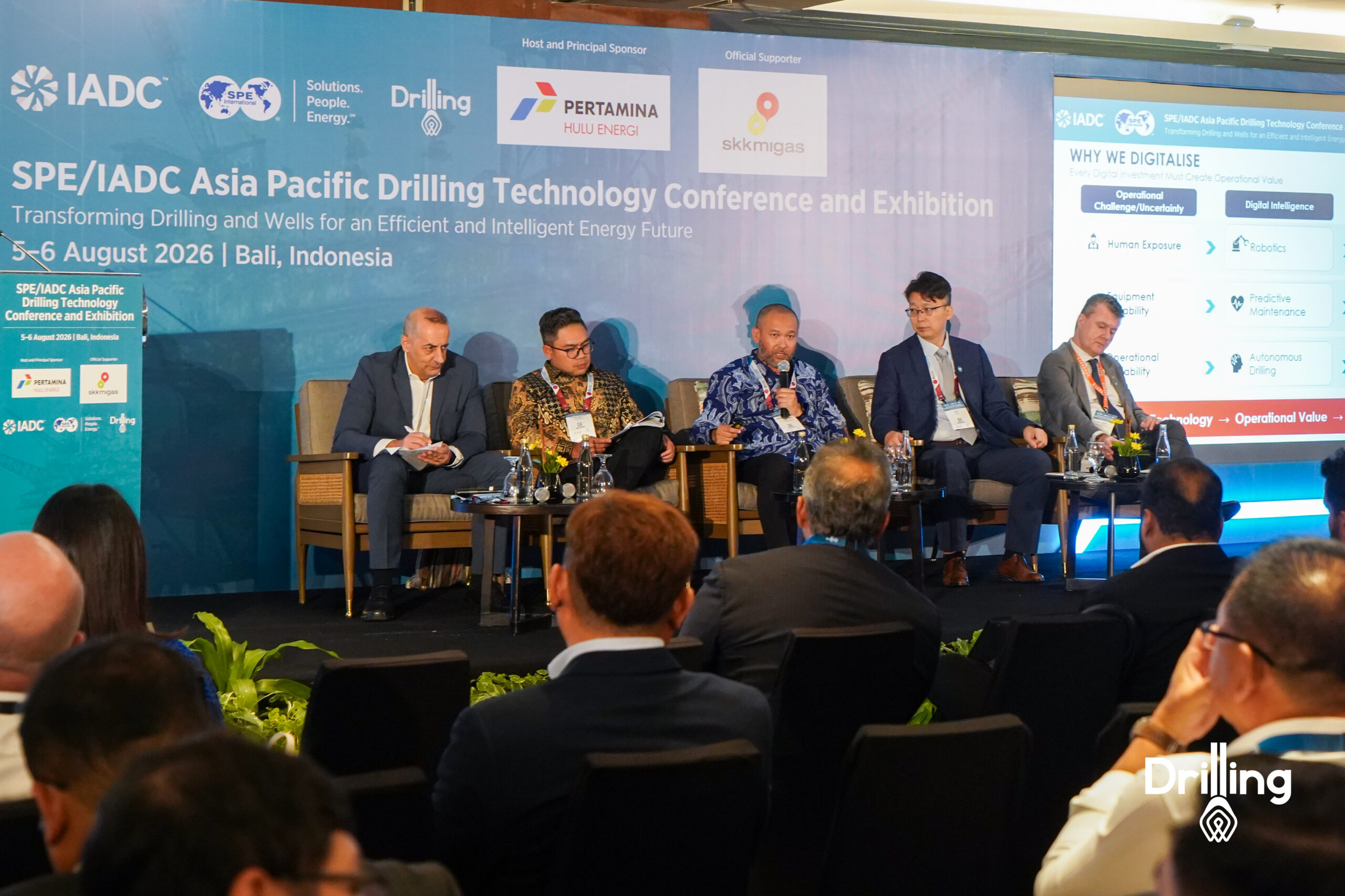
That counsel came from Matt Regan, Vice President, Business Development for Exebenus at the SPE/IADC Asia Pacific Drilling Technology Conference in Bali, Indonesia, on 5 August. Speaking on a Digital Intelligence in Drilling panel, he noted that there is now an abundance of rig-site data infrastructure for data generation, transmission and consumption. This means there should not be a lack of access to quality-assured, real-time data that can be shared with stakeholders collaborating on well delivery.
“More recently, it’s relatively rare to not have sufficient computing power and processing power to be able to do very sophisticated things with that data, whether it’s in the form of paid-for commercial processing capabilities in the cloud, whether it’s in real-time operations centers, whether it’s small boxes at the rig site that have sufficient computing power to do on-site, at-edge processing, or even being able to deploy this within tools downhole,” Mr Regan said.
From data acquisition to actionable insights
The industry’s digital transformation is not just about capturing the thousands of data points generated during a drilling operation. It’s about how to convert that data into decision-making tools that will inform operational decisions for the current well and provide lessons for future wells, said Khairul Amir Khazali Rosli, Senior Manager Wells for Searah Ketapang, part of the Searah joint venture launched in June 2026 by Eni and Petronas. “When we talk about decision-making tools, we’re not talking about the automation. Automation will be the last part of it,” he said.
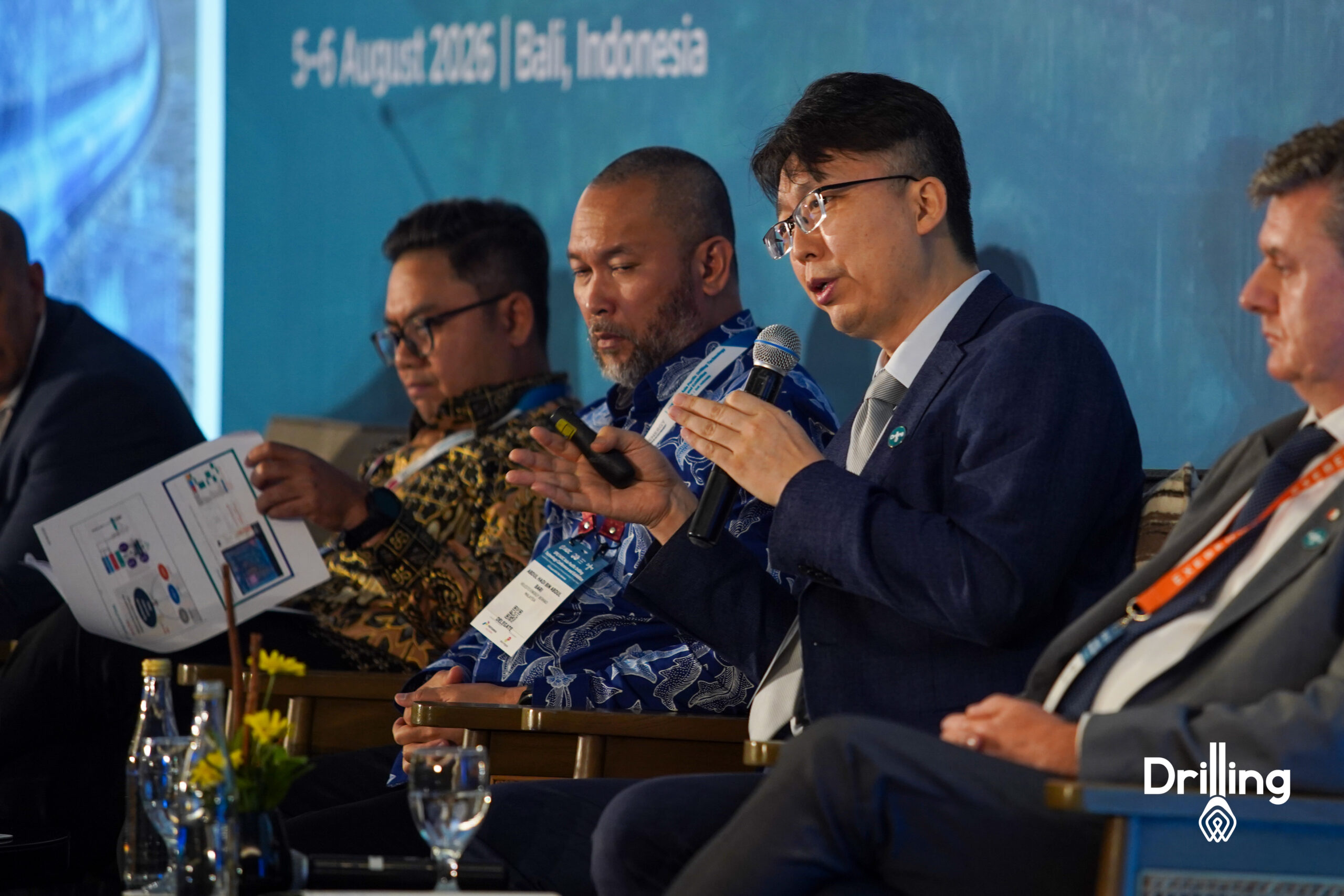
Full automation is the ultimate goal in a six-level approach that guides the China Oilfield Services Ltd (COSL) approach to drilling automation, said Li Fei, Deputy Director of COSL’s Key Laboratory of Well Logging and Directional Drilling. From level zero (purely manual operations), automation progresses to level one (assisted operations still requiring rig-site personnel), levels two and three (single-task automation for downhole tools), level four (highly autonomous equipment) and level five (fully autonomous). Depending on the project, the highest level of automation available may not always be best, Dr Li cautioned, noting that the ideal level will be defined by the risk the operation can bear, factors such as the return on oil production requirements, and other variables.
Abdul Hadi Abdul Bari, Senior Vice President, Drilling Business for Velesto Energy, stressed that the key objective for adopting AI is “the operational value that we can gain from the solutions.” As a small company, Velesto moves cautiously on new technology investments, he said, and assesses whether the technology will provide safer operations for its people, improve equipment reliability and reduce operational variability.
“Execution is all about consistency,” Mr Abdul Hadi said.
AI-based machine learning can bring greater consistency and objectivity to the analysis of operational data relative to human perceptions, which may be open to cognitive or confirmation bias, said Mr Regan. Machine learning, when done well, “can handle vast volumes of extremely disparate sources of information and look at very, very nuanced trends and anomalies and outliers in those trends in a very, very objective way. It is an innately objective, measurement-based process,” he said.
Intelligent drilling in action
Mr Regan shared an example of how machine learning agents could have helped a drilling team avoid up to 20 hours of nonproductive time (NPT) stemming from a stuck pipe. From the surface, the team had not noticed anything concerning until it was too late. They later asked Exebenus to conduct a retrospective analysis to determine what went wrong. The company ran the scenario through three machine learning agents designed to look at specific drilling challenges, such as hole cleaning and dynamic and static friction-related issues. The exercise showed that the hole-cleaning agent would have picked up subtle, early indications of anomalies around six hours before such issues became apparent to the crew, Mr Regan said.
“That would have given you plenty of time to address appropriately what needed to have been done to prevent this NPT issue from taking place,” he said.
In another example, Exebenus deployed a machine-learning application for a company looking to improve its rate of penetration (ROP). It had already pushed its equipment to the max on its last well to surpass the ROP benchmark in a campaign of identical wells.
The machine learning ran in real time for the next well, constantly assessing different scenarios and suggesting which one could deliver incremental improvement in performance at that moment. The rig crew followed the system’s recommendations – even when they appeared to be counterintuitive, such as decreasing the weight on bit, increasing the RPM and reducing the amount of torque.
“As a result of doing this, they delivered 33% increase in ROP on the previous best well, just by following the recommendations that the system was producing relatively counterintuitively because there’s no bias in the system,” Mr Regan said.
“When machine learning is designed well, populated well, trained well, it delivers staggering, phenomenal results,” he added.
Other companies are also experiencing success with intelligent drilling strategies. On two of its rigs, Velesto has equipped rotating equipment with approximately 150 sensors to detect abnormal vibrations and enable engineers to take corrective action. Mr Abdul Hadi shared one example of success in which a sensor warning of abnormal vibrations led to the discovery of rust accumulation inside a piece of equipment, which crews were then able to address proactively.
COSL has also been busy in the AI and machine learning space, including applying well trajectory engineering software to around 200 wells last year and launching an AI agent this year to support field engineers.
“We want to be part of this future intelligent drilling, so we are actively developing all of these solutions for different clients internationally,” Dr Li said.
Define the drilling challenge
The panelists discussed some of the key challenges involved in embedding digital intelligence into drilling operations. One essential requirement when building a machine learning model is to clearly define the challenge, Mr Regan said.
“You build a machine learning model to look at a particular challenge, and the better you define that challenge, the better the output is going to be. Machine learning is very good at giving definitive responses to a challenge that has been well defined. The less well-defined the challenge you design your model around, the worse the output is going to be.”
The problem is that drilling is not in itself a clearly defined challenge – it has multiple different challenges going on at the same time, Mr Regan said. For that reason, his company builds multiple agents for each component of drilling.
AI agents can even be used to improve performance in a frontier basin where no data from offset wells is available. For example, Mr Khairul Amir noted that real-time data transmitted back to the office on issues such as pore pressure and temperature can help to manage safety risks.
Mr Regan added that machine learning agents can be trained on generic data to look for specific dysfunctions and optimization opportunities that can be applied to frontier exploration where there is no offset analogous data for training – an approach his company has had success with around the world, he said.
Build for collaboration and compatibility
Pulling together the data needed for drilling intelligence can be difficult when the client, the drilling contractor and multiple service companies all have their own systems and platforms, Mr Abdul Hadi said. Considering how to bring all the required data into a single operational decision is crucial, and overcoming this could be “the game changer for the industry,” he said.
Sometimes it can be challenging to share training data for machine learning among different disciplines or sections within the same company. To address this problem, Mr Khairul Amir said his company uses a platform called FENEX (Front End Well Engineering Nexus), developed by Petronas, along with a companion platform called DRINEX (Drilling Nexus), to ensure everyone is working from the same data. “Hence, we have consistently the same data from the planning to the execution of the well,” he said.
Dr Li said he envisions a future in which machine learning modules can be integrated like LEGOs into specific tools or tasks depending on the needs of the operation. Collaboration among the operator and service providers will be a “major challenge,” he said, to ensure their modules are compatible.
He also pointed to a technical factor that could potentially slow automation progress: There are limited providers for the kind of high-temperature, high-reliability microchips or processors required to support the processing capacity needed for more intelligent bottomhole assemblies. That’s something the industry will have to address to continue advancing some essential drilling tools.
Human experience and judgment still matter
Mr Regan emphasized that the expertise of the sector’s personnel is still critical, even as automation inevitably reduces the number of people needed for certain manual tasks.
“Machine learning is one aspect of the whole deliverable. You then rely on the operational expertise of the people whom you are delivering that advice to for them to be able to decide, ‘This is what we need to do to prescribe and preempt this risk from becoming an incident.’ ”
The automation that Velesto has adopted to date has led to more consistency in drilling execution, Mr Abdul Hadi said. While the company’s drillers are still in command, they can focus more on high-level activities, such as situational awareness. AI provides helpful information, but it’s the people who still make the decisions.
“We still need people to monitor the operation,” he said, adding that future operational excellence will not be defined by who has the most AI but by organizations’ ability to combine people, digital intelligence and strong operational discipline. Organizations can’t make well-informed decisions without digital intelligence, but it’s also true that “the technology will not be meaningful without the experience of the people,” Mr Abdul Hadi said. DC