Toney Deer, WCS: Turning field experience into better training, standards for a growing industry
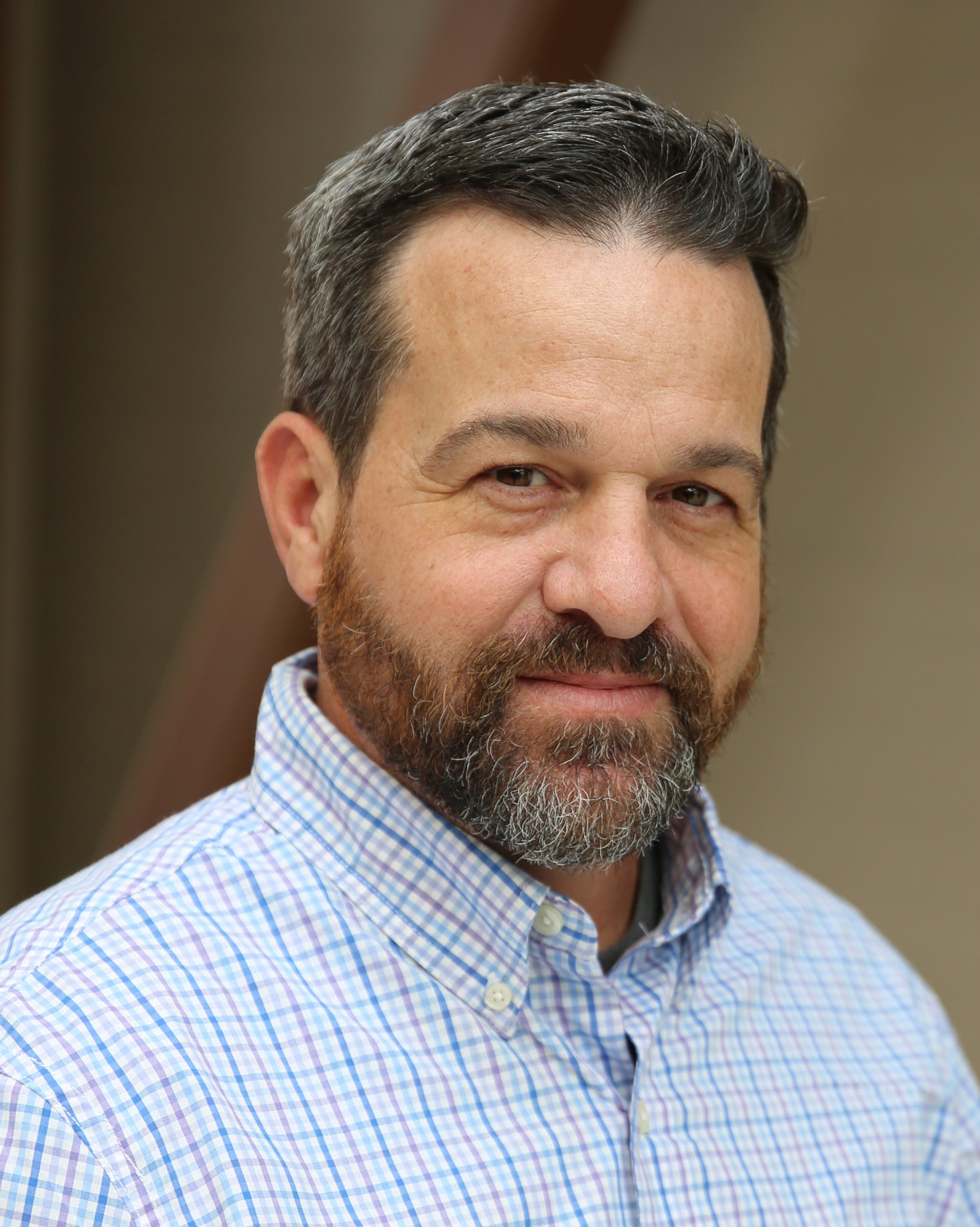
By Stephen Whitfield, Senior Editor
Toney Deer came to his current job at the Well Control School (WCS) in a strange manner.
It started, almost accidentally, on a painfully slow internet connection in Yemen. Stationed there as an operations improvement manager — after leaving Iraq when ISIS’s advance made staying untenable — Mr Deer was killing time waiting for a computer-based well control training module to load on a single, overtaxed server shared by the entire country. Mulling a career move, he submitted a resume for a position at WCS on a whim. Two days later, the company called and offered him a job.
“I looked at that rocket launcher one last time, parked next to my diesel tank, and I was like, yeah – get me out of here,” he says.
He joined WCS for the first time in 2014, left briefly to scratch the itch of returning to the field, and came back for good around 2020, when the industry downturn made the classroom the more sensible place to be. Even during his time away, he says, he kept teaching on his days off. Training became, as he put it, “the passion I never knew I had.”
Officially, his title at WCS is Director of Training and Chair of Geothermal Development for International Training Services. Unofficially, his title seems to be “jack-of-all-trades.” Whatever can be done to help advance safety within the industry, he’s up for it. At WCS, he leads educational programs, overseeing course curriculum and training delivery for oil, gas and alternative energy operations.
He teaches advanced and workover well control classes, incorporating real-world field experience and simulator training. He’s also spent the past year and a half developing a geothermal well control simulator at WCS, a project that went through two failed vendor relationships before he found the right development partners. He also represents the company on technical industry committees, serving as the North American Chapter Secretary for the International Well Control Forum and participating on standard-setting panels for the American Petroleum Institute. And in June 2026, he took on the role as Vice Chair of IADC’s Geothermal Committee.
Mr Deer said his passion for well control training stemmed from his previous experience working in various roles on land and offshore rigs in the US and the Middle East. He’s taken a safety valve to the face. In another incident, he nearly died when a bolt plug came close to clipping his cheek. He watched his rig burn for three or four days after an unexpected shallow aquifer packed with methane blew out on a surface hole with nothing but conductor pipe set. Luckily for him, he was off of work when the blowout happened.
“I’ve had too many friends not go home for one reason or another,” he said. “The reason I do this is so I can reach people and get more knowledge out there. I can do more from this position than I can on a single rig. I’m doing what I can to keep people safe.”
In 2024, as the IADC Geothermal Committee starting its work on the Geothermal Well Control Guidelines, Mr Deer stepped up and volunteered to lead the Well Control work group. He had previously worked as an Assistant Driller for a geothermal operator in Hawaii in the mid-2000s. He had also worked on several high-pressure, high-temperature wells during his time in Iraq and Yemen. Although the bulk of his career has been spent on oil and gas, geothermal always held an interest for him.
“I hate cookie-cutter stuff,” Mr Deer sayid. “It doesn’t challenge my brain. It’s actually kind of boring, and unfortunately, it makes people complacent. I like the exploratory work – using my head and solving problems as they come.”
Mr Deer was the key contributor in drafting the Well Control Guidelines, which was published in May 2026 and will be part of the comprehensive IADC Geothermal Well Construction Guidelines, which is still in development.
One of his priorities while drafting the Well Control Guidelines was to clear up common misconceptions about the similarities between well control for oil and gas and well control for geothermal. While geothermal operators rely on the oil and gas sector’s drilling equipment and basic operational concepts, their goals are fundamentally different: hydrocarbon extraction vs. extracting heat from high-temperature, corrosive environments.
That goal creates a unique risk profile for geothermal wells. Standard well control equipment is typically rated to around 350°F, well below what many geothermal wells encounter. Choke and kill lines built for gas expansion aren’t built for the two-phase or multi-phase flow that steam produces, and an aquathermal event – where steam flashes violently – can erode surface equipment with the force of a high-pressure water jet.
Mr Deer describes the phenomenon in stark terms: two cups of coffee’s worth of steam, flashed instantly, is enough to fill an entire bedroom. Wells can’t be killed with weight the way a conventional gas well can; they have to be cooled, and cooling too quickly risks collapsing the steam column, creating a vacuum effect that can collapse casing or open hole outright.
“A lot of people think that geothermal is mostly the same as oil and gas, and that’s not correct. I’d say only 40% of it is the same. The cause and effect of various actions, and the repercussions of those actions, are different. How you handle steam is different from how you handle gas,” he said.
Mr Deer’s role with the Well Control Guidelines grew out of a gap he kept running into: Almost no recognized industry standard existed for geothermal well control training, and the handful of reference documents that did exist were thin and outdated. Worse, he found that even experienced hands often assumed geothermal well control was more identical to oil and gas, than it actually is. He points to a common misconception among students – confusing quenching with bullheading simply because both involve pumping down the annulus – as exactly the kind of misunderstanding the guidelines are meant to correct.
While he was the leader of the Well Control workgroup, Mr Deer was quick to point out that he was not the only person making significant contributions to the guidelines. In fact, he emphasized the collaborative nature of writing them.
“I have always and will always give credit to the people who help build these guidelines,” he said. “They tolerated me for four hours a week every week for a year and a half because they believe in helping the industry as much as I do and understood the importance to have some kind of foundation to rely on. None of this would have gotten accomplished if it wasn’t for their dedication.”
In addition to his work with the Well Control Guidelines, Mr Deer also contributed to the geothermal supplement for the IADC WellSharp training program. This curriculum will contain several hundred discrete learning points, from distinguishing bullheading from quenching to handling aquathermal events, thermal derating of equipment, and kill methods for flashing or mixed hydrocarbon-steam scenario. He’d finished building the curriculum roughly a year before the guidelines were formally approved, timing the two efforts so the training material could be revised alongside the standards rather than built from scratch afterward.
Beyond that, Mr Deer said he hopes the Geothermal Committee can use the guidelines as a springboard to develop wider knowledge-sharing protocol, even though there are no concrete plans for that right now.
“I believe that, for geothermal to succeed, it needs to have a good name, and if we can stop incidents before that, if we can learn like we do in oil and gas, that would be great,” he said. “The technology is developing so fast. Some kind of format for knowledge sharing would only help the industry grow.”