The industrialization of engineering intelligence
Next competitive advantage to come from trusted engineering intelligence, not more data
By Jason Norman, XRF-Fluid Intelligence
For years, the drilling industry has used automation to describe very different levels of technology maturity. Sometimes it means instrumentation: measuring, displaying and trending what is happening. Sometimes it means mechanization: moving equipment with less manual effort. Both create value, but neither transforms engineering decision making by itself.
The industry is now entering a more important transition: the Industrial Intelligence of Well Construction. This is not about overselling autonomy. It is about using data, physics, validation, workflow integration and software to improve decision quality at scale.
The objective is not simply to digitize the rig but to digitize engineering judgment. Rig controls, dashboards, remote operations, predictive analytics, machine learning, equipment-health monitoring and decision-support tools are all part of the transition. The strategic prize is larger: better decisions across every rig, well, basin and customer.
Data supports decisions today and will drive decisions tomorrow. Eventually, data will continuously improve decisions. The drilling contractor of the future will be valued not only by the iron it owns but by the engineering intelligence embedded within that iron.
Missing engineering layer
One layer remains underdeveloped in most digital well construction strategies: the drilling fluids and solids control system. Every major drilling model depends on the drilling fluid: rate of penetration, torque and drag, hydraulics, hole cleaning, managed pressure drilling, equivalent circulating density, vibration, stick-slip, bit wear, casing running, cement displacement, formation damage, waste disposal and equipment efficiency.
Those models assume the fluid properties entering the calculations represent the fluid circulating through the well. Yet drilling fluid data is still often collected periodically or manually, or assumed, rather than continuously validated digitally.
That is the gap. The drilling fluid is the wellbore operating environment. It changes with every drilled foot, formation, barite addition, base-oil addition, chemical treatment, centrifuge adjustment, shaker screen change, loss event, influx and waste management decision.
If the software understanding of the fluid drifts from reality, every downstream model drifts with it.
Industrial intelligence requires trusted inputs
The next leap will not come from more sensors alone. It will come from trusted engineering inputs. A digital platform does not require perfect information. It requires quantified confidence in the information being used: sensor validation, outlier detection, mass-balance logic, physics-constrained calculations and SME governance.
Every sensor measures data. Very few systems measure confidence in that data.
For drilling fluids and solids control, the digital platform must continuously quantify:
- Compositional mass balance: oil, water, low-gravity solids, high-gravity solids and brine behavior.
- Solids loading, particle size distribution, drilled solids profile and barite recovery efficiency.
- Mineralogy, salinity, hardness, contaminants and formation-derived signatures.
- Shaker, centrifuge, dilution, solids removal and waste generation performance.
- Measurement confidence, sensor drift, QC flags and physics-constrained validation.
- Once these variables become trusted inputs, drilling fluid intelligence can feed the same digital workflow as rig controls, hydraulics, directional performance, equipment health, remote operations and customer-facing optimization software.
The strategic asset: fleetwide engineering data
Every drilling contractor already has access to something few industries can replicate – massive high-value engineering data across the well-delivery process.
Each rig is its own data ecosystem. Each well is an engineering laboratory. Across a fleet, the scale and diversity of the dataset begin to resemble the data ecosystems that built the world’s leading technology companies.
Silicon Valley built platforms that learn from millions of users. Drilling contractors can build platforms that learn from millions of engineering decisions. This is the mindset shift: move from heavy iron to high-tech data intelligence. The advantage is no longer the sensor alone. It is the intelligence created from the data.
The drilling contractor is uniquely positioned to deliver digital well construction intelligence at the lowest total cost because the contractor already controls the environment where the data is created.
The contractor has the rig, controls, edge computers, communications, remote operations center, crews, customer relationship, performance data and digital roadmap. No outside provider has the same continuous visibility across the full well delivery process.
That creates five structural advantages:
- Lower deployment cost through fleetwide standardization.
- Lower data-acquisition cost through existing digital infrastructure and workflows.
- Higher integration value across rig controls, hydraulics, directional performance, solids control, equipment health and reporting.
- A larger learning network because every rig, well, basin and customer deployment improves the models.
- A stronger monetization path as validated models become recurring software applications, optimization services and decision-support products.
The organization closest to the data and workflow is best positioned to create scalable software value. In drilling, that organization is increasingly the drilling contractor.
The data ownership question
It does not make rational business sense for a drilling contractor to treat its own well construction data as a byproduct of someone else’s technology deployment.
A third-party instrument connected to the circulating system can become more than a sensor. It can become a data platform. That data trains algorithms. Those algorithms become software products. Those products create enterprise value.
The contractor does not need to manufacture every sensor. Specialized instrumentation companies will continue to matter. The strategic issue is who owns the data architecture, validation logic, model governance, workflows and software applications that convert measurements into decisions.
The stronger model is a unified contractor-owned engineering intelligence platform: open enough to integrate best-in-class instrumentation but disciplined enough to protect data, validate measurements, standardize models and monetize fleet-level software value.
From digital operations to digital engineering
Most of the industry has already digitized operations. Reports are electronic. Equipment streams data. Dashboards are remote. Trends are visible in real time. That is progress, but it is not the endpoint.
The next phase is digital engineering: converting physical measurements into validated, physics-constrained, decision-ready variables. The software should not merely show what happened. It should help explain why it happened, what is likely next and which action carries the highest confidence.
For drilling fluids and solids control, the SME is not removed from the workflow. The SME is scaled through the workflow. The best systems let experts supervise more rigs, focus on exceptions, improve models and embed judgment into the platform. A roadmap for drilling contractors to execute this transformation could include these steps:
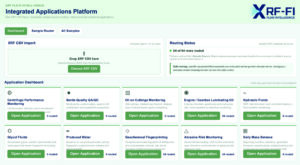
- Define the drilling fluid and solids control data architecture for digital well construction.
- Determine which properties should be measured, inferred, validated by mass balance or confidence-scored.
- Convert fluid measurements into physics-constrained variables for hydraulics, digital twins, rig performance, equipment health, remote operations and optimization software.
- Build applications that monetize each deployment through recurring analytics, performance optimization, exception management and decision support.
- Protect the contractor’s data position while integrating across service companies, operators and existing platforms.
- The mission is not simply to measure drilling fluid better but to help drilling contractors convert fluid, solids control and well construction data into trusted engineering intelligence. The most valuable asset is the data. DC