Peter Smith, Seadrill: Going beyond just emissions to achieve sustainability
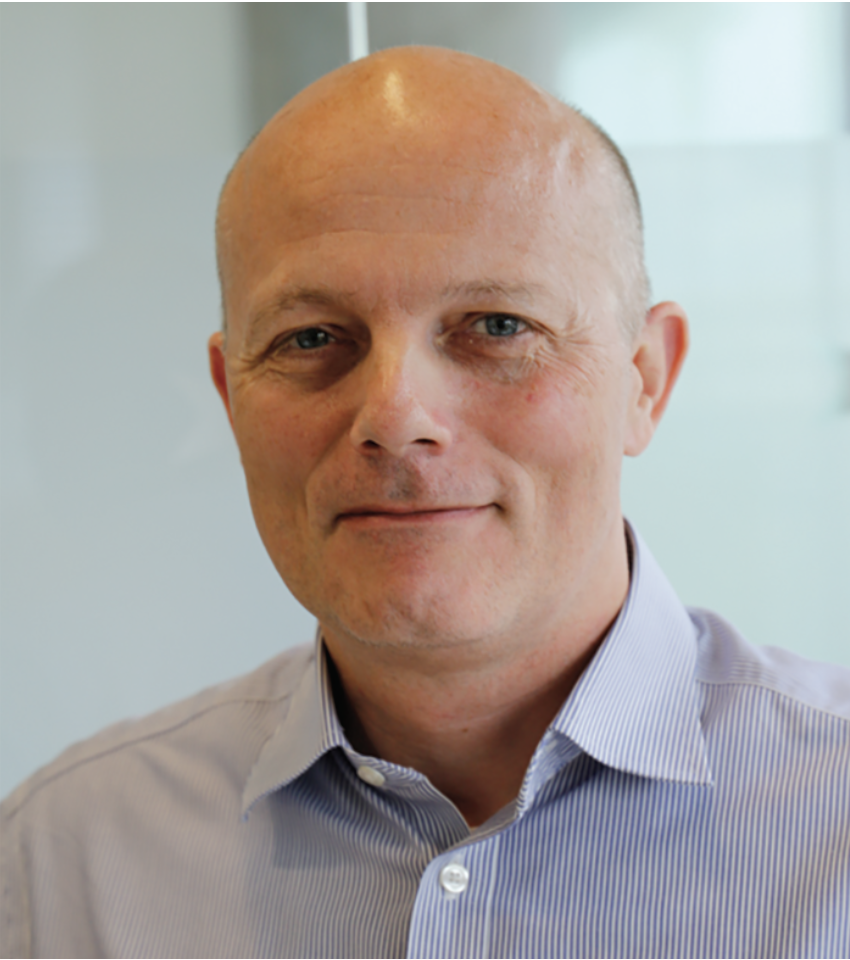
By Stephen Whitfield, Senior Editor
For Peter Smith, the Head of Process Safety & Environment at Seadrill and Co-Chair of the IADC Sustainability Committee, the word sustainability means more than just protecting the environment.
He takes a much more nuanced view on the concept, one that partly stems from the time he spent in the Falkland Islands during his childhood in the 1970s. Living in the British overseas territory offshore Argentina put him in close contact with the area’s wide array of aquatic wildlife – penguins, seals, whales and everything in between.
He’s also been influenced by early-career experiences in several countries on multiple continents. After graduating with a degree in civil engineering from Warwick University in England in 1991, he worked on the initial stages of the Great Man-Made River Project in Libya, one of the world’s largest irrigation projects. He also worked as an Environmental Engineering Manager based in Azerbaijan and later as an Environmental and Infrastructure Adviser in the UK and India.
In the oil and gas sector, he has served as a lead HSE Engineer for LNG plants in Peru and Siberia. He also spent four years with Aker BP as the lead HSE Design Engineer of the Equinor-operated Johan Sverdrup FPSO offshore Norway, and he’s overseen HSE design for other operators.
Based on such broad exposure to all these diverse environments, Mr Smith says he now believes that sustainability is “a reflection of the people in a given space.” Some countries have robust climate transition plans, and the companies working there have to operate within the boundaries set by those plans. Other countries may not have developed as strict of a regulatory regime around emissions.
Now, in his current role with Seadrill, Mr Smith saId he finds it important to look at sustainability from a systems standpoint. While the end goal is to lower emissions, there are a number of ways to get there. Part of his work overseeing process safety and the environment involves facilitating the organization’s decisions to invest in technologies that can ultimately lead to reduced emissions, and another part involves facilitating customers’ decisions to use those technologies.
Understanding how different people see sustainability differently allows him to catch pockets of opportunity in this work. The project can be both big – like with advanced generator protection or closed bus tie systems – or small – like replacing incandescent lights with LED lights on the rig.
“You really enhance the value by thinking about things in a systems way, looking at how the environment works and how sustainability works. If you look at a system through a purely monetary conception, you actually miss a lot of value,” he said.
Mr Smith also said he believes the industry can sometimes get too “defensive” when trying to communicate the value that it brings to global sustainability efforts, especially when faced with “a very uninformed view of the oil and gas industry that we’re the problem with climate change.” However, it is important for the industry to be more vocal about how it can contribute to a low-carbon future, as well as how it’s working to remain a key part of the future energy mix.
“The oil and gas industry provides vital inputs into society. It’s really important for us to get people to understand what the oil and gas industry is about. We’re not just drilling for oil and producing oil because we want to burn it. We’re producing oil because there’s a societal and economic demand. It’s vital for people’s livelihoods and their standard of living.”
Getting this message across to the public means talking more about projects like Seadrill’s ongoing collaboration with Petrobras to study how fuel additives can reduce offshore rig energy use. The effort, which kicked off in October 2025 and is expected to finish later this year, involves the monitoring of two engine rooms – one with additives, one without – over a year-long period on a dynamically positioned vessel.
The IADC Sustainability Committee has been a key platform for Seadrill to discuss this study with other companies that are engaging in similar work, Mr Smith noted. Communicating about projects like these is vital to advancing the industry’s sustainability goals, he added, which can be done while simultaneously being careful about preserving an individual company’s competitive advantage. Since taking over as Co-Chair of the committee in 2024, he has prioritized advocating for more open communication.
“We have a number of projects in terms of looking at alternative fuels. I know our peer companies are looking at the same sorts of things, and a forum like ours is so important for sharing experiences,” he said. “It’s a way for us to actually look at what’s happening in the industry and where people are being successful. Some people might say we’re giving away competitive secrets, but I truly believe that sharing this kind of information is beneficial for everyone.” DC