Fully automated well placement with complete rig automation achieved in Guyana
A group of organizations encompassing ExxonMobil, Halliburton, Sekal, Noble and the Wells Alliance Guyana team recently achieved what it called the industry’s first fully automated geological well placement with complete rig automation offshore Guyana. The project combined rig automation, automated subsurface interpretation and well placement, and real-time hydraulics to establish a benchmark for well construction performance, reservoir contact and execution efficiency. This achievement advances the FutureWell initiative in the Wells Alliance Guyana effort by unifying subsurface insight, automation and rig systems to improve execution.
Halliburton used LOGIX orchestration and automated geosteering with the EarthStar ultra-deep resistivity service and Sekal’s DrillTronics to create an integrated closed-loop system. The system steers the well within reservoir boundaries and autonomously optimizes drilling and tripping operations. Real-time optimization algorithms and geological inversion data inform automated rig control, hydraulics and well placement within a single workflow to eliminate the traditional separation between subsurface interpretation and drilling execution.
Halliburton product service lines and the Wells Alliance Guyana team executed the project through an highly integrated collaboration. Ongoing feedback loops among drilling, geology and automation teams ensured reliable closed-loop performance throughout the effort.
The reservoir section was finished approximately 15% ahead of plan, and the time for tripping operations was reduced by approximately 33%. The system demonstrated measurable efficiency gains of closed-loop automation beyond drilling. It also maintained precise well placement in challenging conditions and placed approximately 470 m of the lateral section in the reservoir with active automated geosteering and inclination corrections during the run.
Tethered BOP system customized for US Gulf conditions
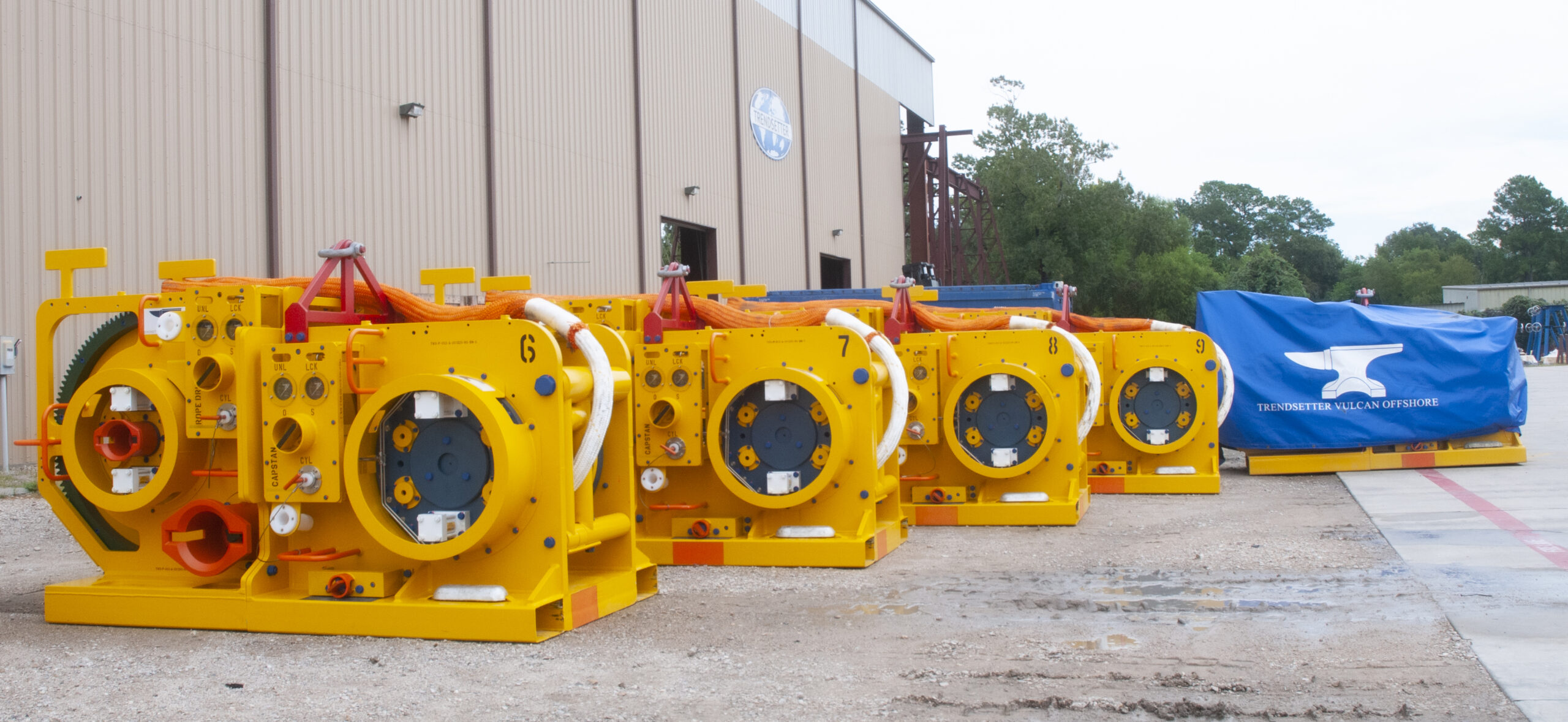
Trendsetter Vulcan Offshore recently completed a tethered blowout preventer (TBOP) installation in the US Gulf to reduce wellhead fatigue in soft seabed conditions.
The Hercules TBOP system was originally developed to allow a deepwater floater fitted with a dynamic positioning system to work safely in shallow water. The basic system configuration employs four polyethylene-based tethers anchored to suction pile foundations on the seabed, arresting BOP stack motion above the wellhead and transferring loads to the tethering system, foundations and seabed to substantially reduce wellhead cyclic stresses and enhance fatigue life.
Operations on this well, in nearly 4,000-ft water depth, were challenging due to the extremely soft seabed in the well’s vicinity, which created the potential for higher-than-normal fatigue loading on the well system. The tethering system was installed to allow wellhead fatigue to be managed with the rig BOPs installed and to provide stability to the well system during critical operations. This allowed operations to be completed on a well with potentially elevated risk.
Field testing validates DWIS platform capabilities
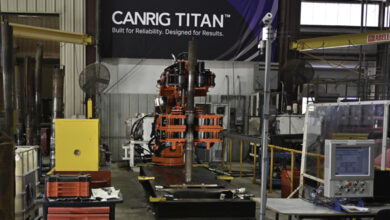
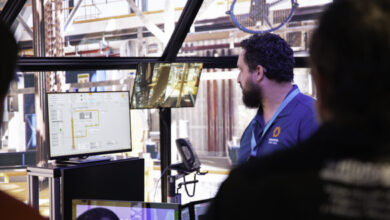
The NORCE Norwegian Research Center recently completed a field demonstration of the Drilling and Wells Interoperability Standard (DWIS) platform, combined with autonomous drilling capabilities, at the Ullrigg test facility.
The objective was to demonstrate real-time interoperability among multiple vendor systems and validate DWIS as a common data infrastructure for drilling automation. According to NORCE Chief Scientist Eric Cayeux, the systems exchanged data through the DWIS Blackboard architecture, allowing applications to discover and use signals automatically. During the test, the team was able to:
- Integrate multiple automation systems.
- Demonstrate automated drilling functions such as pump and rotation control.
- Implement fault detection, isolation and recovery protections and safe operating envelope limits.
- Integrate additional measurements such as downhole pressure and cuttings monitoring at the shakers.
- Demonstrate that systems from different vendors can interact operationally without custom point-to-point integrations.