Operational consistency among key goals as Transocean transitions MPD strategy
Taking full MPD ownership is allowing for standardization that streamlines maintenance, crew training, procedural requirements
By Stephen Whitfield, Senior Editor
Managed pressure drilling (MPD) equipment and technologies have undergone a fundamental shift in ownership over the past decade. Whereas MPD was once a service delivered directly to operators by third-party providers, drilling contractors have increasingly taken over this space, including the engineering and the operational risk that come with running these systems. This transition has led rig contractors to build in-house capabilities that didn’t previously exist at scale.
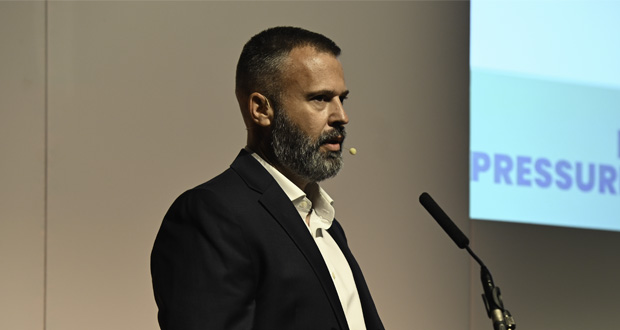
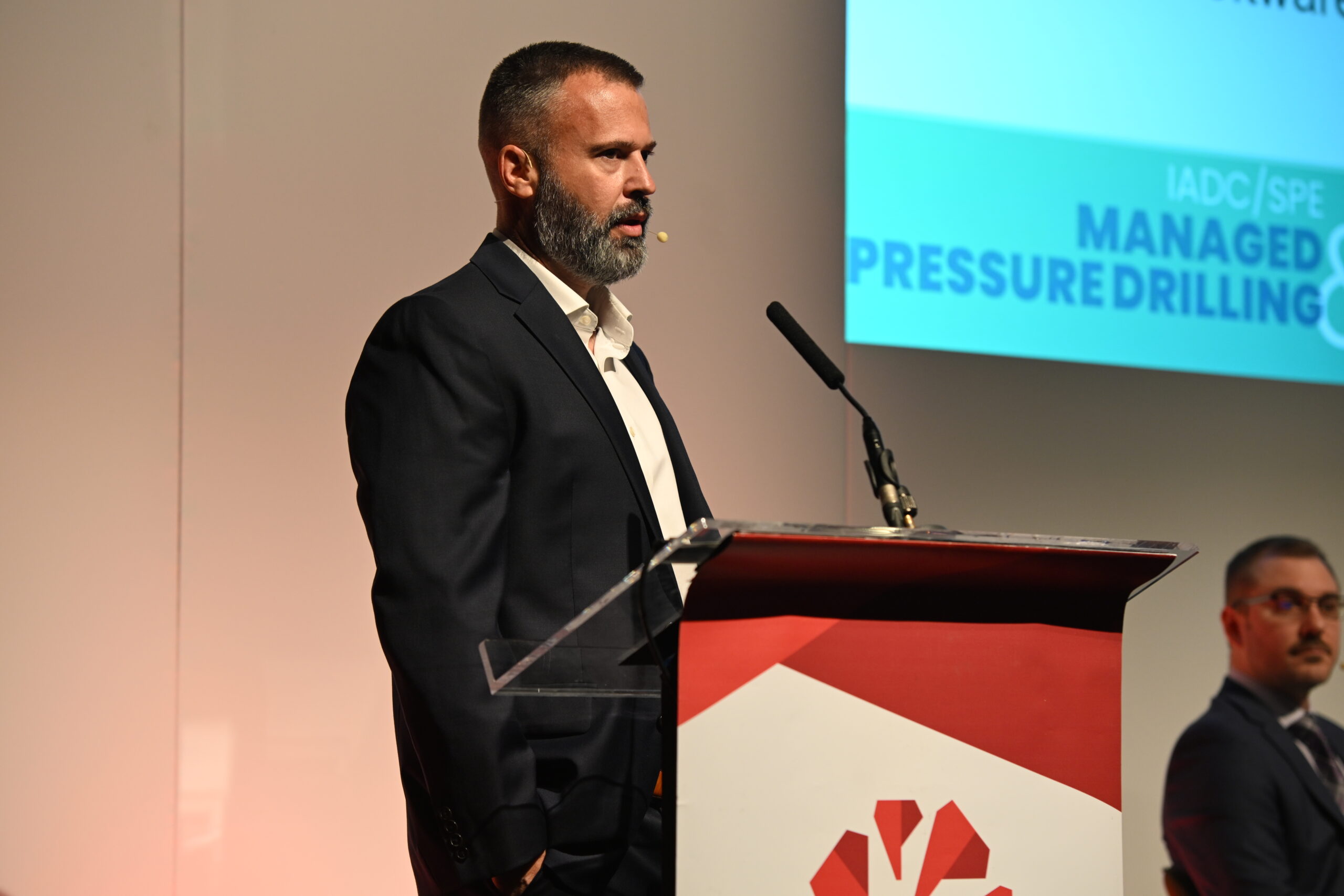
Transocean has spent the past several years working through this shift, rebuilding how it designs, deploys and maintains MPD systems across its fleet. This included closing gaps that were identified as the company adopted the contractor-owned MPD strategy. Jon Thain, MPD Manager at Transocean, laid out that journey at the 2026 IADC/SPE Managed Pressure Drilling and Underbalanced Operations (MPD/UBO) Conference in London in September.
This effort started by identifying problems that were recurring even when MPD was delivered by third-party providers. For example, that previous approach to MPD had often led to operational inconsistency on the rig floor. “We’d see a lot of the time that there would be multiple people on the rig floor,” Mr Thain said. “We were performing critical operations – primarily influx management – where our drill crews and drill teams were getting conflicting messages from the teams on the rig floor at the time.”
Equipment reliability, particularly around the internal riser joint, was another issue. In the early stages of taking on MPD system ownership, Mr Thain said Transocean was seeing nonproductive time (NPT) on internal riser joints as high as 5-6%. This problem was compounded by OEM repair and maintenance procedures, which were sometimes misaligned with Transocean’s expectations.
A third issue was that software upgrades routed through the OEMs could take six months or longer to validate and deploy. This, he said, is largely a function of the size and complexity of the organizations involved, even when problems had already been identified in the field.
Finally, procedural sprawl had become unmanageable: “Historically, we’ve had 10 to 12 MPD systems running concurrently. Each of those systems originally had around 60 procedures. When you consider we had 12 operations running, that’s 720 different procedures that we were trying to manage across the fleet. That’s all different OEMs and different operators.”
Underlying much of the procedural sprawl, Mr Thain said, was a pattern in which third-party solutions often prioritized available inventory over fit-for-purpose design. This meant systems were often not tailored to a rig’s specific configuration or operational scenario.
Standardize, simplify
Transocean organized its response to these problems around five pillars: standardization, customization, ownership, performance and reliability. Central to its effort was a decision to extend in-house ownership across the full MPD lifecycle.
Rather than treating engineering as work that could be performed only by third parties, Transocean brought its engineering in-house. Mr Thain said this was intended to expedite the driller’s response to customer requests. It would ensure that engineering solutions aligned with the company’s internal processes and commercial objectives, and it would simplify regulatory compliance since Transocean could draw on accumulated operational experience and lessons learned.
Since the company already possessed strong internal expertise in MPD equipment selection and system integration, this reduced the need for outside vendors in that role, Mr Thain said. Core Transocean MPD personnel are now assigned directly to rigs to perform both operations and maintenance work.
The company also consolidated the documentation of its MPD procedures into three tiers: global procedures common to every rig in the fleet, equipment-specific procedures, and rig-specific procedures covering items such as pressure testing. This reduced the fleetwide procedure count to roughly 200.
To review and simplify the legal procedures, the company even brought in independent technical writers with backgrounds at NASA and Boeing, Mr Thain said. It then worked directly with an independent third party to verify the revised documentation – thus removing that workload from the customer – before rolling the procedures out to the rigs.
Equipment and system-design standardization followed a similar logic. Transocean moved toward a common MPD tower configuration with consistent choke selection, pressure relief valves, electric actuation and valve manipulation across its rigs, along with matching piping and instrumentation diagrams and process flow diagrams. The intent was operational consistency across the fleet regardless of which OEM’s equipment was installed, since rig teams would follow the same workflows for every deployment and operational scenario.
A significant piece of the standardization centered on MPD control system selection. After working with multiple third-party control system providers, Transocean consolidated around a single platform from Kelda Dynamics. Kelda’s system is an annular pressure controller that incorporates models of both the well and the chokes to deliver precise, robust pressure control with minimal operator intervention. Its open integration architecture allows it to connect the rig control systems and third-party internal riser joint and pressure relief valve vendors.
While the core HMI layout of the Kelda system is centered on annular pressure control, it has auxiliary functionality for hydraulic modeling and operational data trending. Mr Thain said this allowed Transocean to consolidate control of the manifolds, electrically actuated valves and pressure-reducing valves into a single interface, rather than the three or four interfaces sometimes required.
“That real estate on the rig floor is at a premium, so we’re trying to minimize the number of HMIs that we’re putting out there for an MPD system. We wanted to reduce that burden on the driller and get as much control from a single HMI as we could,” Mr Thain said.
Reduced system complexity and design consistency, in turn, cut the crew training burden significantly: Mr Thain said crew uptake of the new system has been rapid, and standardizing on one platform also makes it easier to move personnel between rigs.
“We needed to have a system that was very easy for our teams to pick up and use. We have a combination of personnel with an MPD background, and those that we’re moving from other areas across to MPD. A lot of our team has not come from an MPD background, so a simplified HMI was key for us,” Mr Thain said.
System deployment
Commissioning of the first Kelda control system on a Transocean rig, the Deepwater Invictus drillship, took place last year. The process included installing and integrating Kelda’s control system with Transocean’s rig control infrastructure, non-well-based function testing and system integrity tests. This was followed by the commissioning of operations on a non-MPD hole section, a process that Mr Thain said was critical because it incorporated acceptance criteria defined by the operator.
Training ran in tandem, covering both the software and the mechanical equipment. Transocean used its large-scale drilling simulators in the training process.
The first well on which Transocean used the Kelda system did not require MPD. However, the system was brought online anyway as part of overall commissioning and training, with Kelda personnel onboard in a supervisory and troubleshooting capacity. The second well included two MPD sections operated in whole by Transocean rig crews, with OEM personnel present in an oversight role. Ahead of the third well, Transocean and the operator reviewed performance for the first two wells and determined that the rig crew had demonstrated sufficient competency, so OEM personnel no longer needed to be onboard the rig. The third well’s MPD sections were drilled successfully by Transocean rig personnel.
“Once we proved the effectiveness on that first well, we knew we had a solid system and we could move to that full control on those subsequent wells. We’re running the panels, running the equipment, doing the engineering in-house. The system was working as designed.”
In the year since the MPD system was deployed, Transocean has seen MPD-related NPT on the Deepwater Invictus drop from 5-6% to less than 1%, Mr Thain said. It has also seen faster and more consistent connections and greater overall consistency across its fleet. DC